

Top 7 Aquarium pH and ORP Interface Expansion Modules in the USA for 2026
Published on Thursday, February 26, 2026
Signal conditioning and interface expansion modules for pH and ORP probes are the backbone of reliable aquarium monitoring and automated dosing systems. These modules translate fragile electrode voltages into stable, calibrated readings by providing high input impedance, accurate temperature compensation, and multi-point calibration support. Those features matter for sensitive reef tanks, public exhibits, and small-scale aquaculture. In the United States, demand for these modules has grown alongside wider adoption of automated controllers and remote monitoring. Hobbyists value out-of-the-box integration with popular controllers such as Neptune, GHL, and Atlas. Commercial operators require robust, serviceable hardware with industrial communication options. DIY integrators prefer modular circuits like Atlas EZO that are easy to embed in custom builds. Buyers select expansion modules to extend probe lifetime, reduce measurement noise on long cable runs, and gain the confidence to automate dosing decisions without risking livestock. By 2025 and into 2026, the market in the USA emphasizes compatibility, reliable digital output options, galvanic isolation, and field-proven stability across seasonal temperature swings common to American shipments and installations.
Top Picks Summary
Neptune Systems PM1 pH/ORP Module
The PM1 pH/ORP Module is a plug-and-play expansion tailored for Neptune's Apex ecosystem, offering seamless digital integration, automated logging and easy scripting for aquarium pH and ORP control. It earns a market-leader position for hobbyists and public aquaria that need reliable networked monitoring and automated responses, though it typically carries a premium compared with raw circuit boards like Atlas Scientific. Compared to GHL's ProfiLux card it trades some professional multi-channel capability for tighter Apex software integration, and it is functionally more turnkey than the DIY-focused Atlas modules or the standalone Milwaukee controller.

Where to buy Neptune Systems PM1 pH/ORP Module in USA: the trusted retailers we track in this market, with the best price we have observed at each. Prices are checked regularly and can change, and the retailer confirms the final price at checkout.
We may earn a commission on purchases. It never affects our rankings.
$250 – $350
Atlas Scientific EZO-pH Circuit
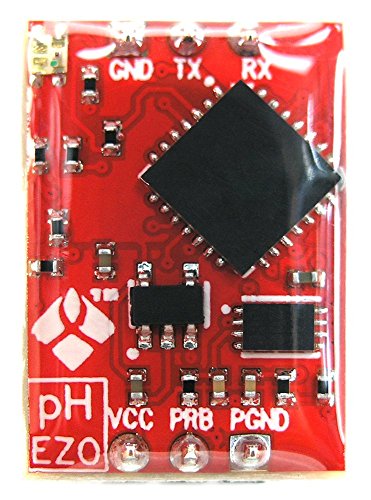
The EZO-pH Circuit is a compact, low-cost interface module aimed at integrators and makers, providing UART/I2C communication, on-board calibration support and low-power operation ideal for custom aquarium pH monitoring projects. It stands out financially and technically for offering professional sensor conditioning at a fraction of the price of fully packaged modules, making it the go-to choice when modularity and integration flexibility matter more than turnkey ecosystem features. Compared with Neptune and GHL, Atlas requires more DIY assembly and external logging, but delivers far better per-channel value and easier scalability than a single-channel controller like the Milwaukee MC122.
Atlas Scientific EZO-ORP Circuit
The EZO-ORP Circuit mirrors Atlas's design philosophy for oxidation-reduction potential sensing, delivering a compact, cost-effective interface with digital comms and onboard signal conditioning optimized for aquarium ORP monitoring. It is the economical technical complement to the EZO-pH, enabling integrators to add ORP channels without the higher system cost of vendor-specific expansion cards, and it scales more cheaply than multi-channel commercial solutions. While lacking the turn-key automation of Neptune or the professional enclosure and support of GHL, the EZO-ORP is ideal when precision ORP measurement is needed in a custom or multi-sensor build.

GHL ProfiLux pH/Redox Expansion Card
The ProfiLux pH/Redox Expansion Card is a professional-grade, multi-channel interface designed to extend the ProfiLux controller with high-precision pH and redox monitoring and industry-grade reliability for serious aquariums. It commands a premium but delivers superior channel density, redundancy options and finely tuned control routines that outpace simpler single-channel controllers and DIY boards, positioning it as the choice for large or commercial installations. Compared with Neptune it offers more professional hardware redundancy and channel capacity, and compared with Atlas circuits it removes the need for custom integration at the expense of higher upfront cost.

Where to buy GHL ProfiLux pH/Redox Expansion Card in USA: the trusted retailers we track in this market, with the best price we have observed at each. Prices are checked regularly and can change, and the retailer confirms the final price at checkout.
We may earn a commission on purchases. It never affects our rankings.
$250 – $450
Milwaukee Instruments MC122 pH Controller
The MC122 pH Controller is an economical, standalone controller intended for straightforward aquarium pH regulation, providing single-channel control, dosing outputs and basic calibration without the complexity of networked ecosystems. It is a budget-friendly practical option for hobbyists who want reliable pH control without paying for expansion cards or integration platforms, but it lacks the multi-sensor scalability, remote logging and automation capabilities of Neptune and GHL solutions. For DIY integrators the Atlas EZO boards will typically offer more flexibility per dollar, while the MC122 remains attractive for a simple, low-cost single-tank setup.

Hydros pH Module by CoralVue
The Hydros pH Module by CoralVue is a best-in-class aquarium expansion module because it’s purpose-built to plug directly into the Hydros controller ecosystem, delivering simplified calibration, aquarium-focused firmware, and clear onboard reporting for hobbyists. Compared with the Atlas Scientific kit, it sacrifices some industrial flexibility in favor of a lower entry price, easier installation, and tighter automation integration — making it the practical, cost-effective choice for most reef and freshwater aquarium setups.

Atlas Scientific Wi-Fi Pool Kit
The Atlas Scientific Wi‑Fi Pool Kit is the market leader for technical flexibility and measurement accuracy, offering Wi‑Fi connected pH and ORP probes with industrial-grade electronics and an open API that supports advanced logging and custom control systems. Relative to CoralVue’s Hydros module, Atlas’s kit is generally higher cost and requires more DIY integration for aquarium use, but it provides superior sensor precision, remote telemetry, and broad compatibility that appeals to advanced hobbyists and commercial aquaria needing robust ORP monitoring.

How pH and ORP Interface Modules Improve Accuracy and Reliability
At a practical level, interface modules do three things: they protect the sensitive electrode signal from loading and electrical noise, they apply temperature compensation and calibration curves so readings remain accurate under real conditions, and they convert analog electrode behavior into robust digital or conditioned analog outputs that controllers can use for monitoring and dosing. Scientific and industry research supports these functions as essential for maintaining water quality and protecting aquatic life in both hobby and commercial settings. Below are beginner-friendly points that summarize the science and best practice findings.
High input impedance protects the electrode: pH glass electrodes produce very small currents. Modules with high input impedance prevent loading effects that would shift readings and shorten probe life.
Temperature compensation is essential: the electrode response follows the Nernst relationship and varies with temperature. Built-in temperature compensation or using a separate temperature probe reduces systematic error over seasonal or equipment-related temperature swings.
Multi-point calibration reduces drift: using two- or three-point calibration across the aquarium's expected pH range corrects slope and offset errors, a practice supported by sensor application notes and aquaculture protocols.
Signal conditioning reduces noise on long cable runs: buffered or digitized outputs and options like differential signaling or galvanic isolation reduce measurement error when probes are remote from controllers.
ORP requires stable reference and routine checks: ORP electrodes depend on a stable reference electrode and tend to drift more than pH sensors. Regular maintenance and module-level diagnostics improve long-term reliability.
Digital outputs simplify integration and logging: modules that provide UART, I2C, RS485, or Modbus reduce conversion error and make remote monitoring, data logging, and automation easier to implement.
Field studies and industry reports show better animal health with tighter control: published aquaculture and aquarium management literature links reduced pH variability and timely dosing responses with improved coral and fish outcomes.
Modular circuits support customization: board-level solutions like Atlas EZO let experienced users build custom enclosures and integrate additional isolation or scaling features without redesigning the sensing electronics.
Frequently Asked Questions
Which pH/ORP module is best for Apex users?
Neptune Systems PM1 pH/ORP Module is best for Neptune Apex owners because it directly connects to Neptune Apex controllers for unified monitoring and control; it also supports plug-and-play installation with configuration via the Apex web interface (rating 4.4).
What exact interface options do Atlas EZO-pH support?
Atlas Scientific EZO-pH Circuit supports UART, I2C, and serial communication, and it includes on-board calibration with configurable output in a compact low-power design (rating 4.3).
How does Atlas EZO-pH price compare to EZO-ORP?
Atlas Scientific EZO-pH Circuit costs $47.99 USDwhile Atlas Scientific EZO-ORP Circuit costs $45.99 USDso ORP is $45.99 USDcheaper for equivalent UART/I2C/serial-style integration and on-board calibration support (ratings 4.2 and 4.2).
Who should buy Neptune PM1 vs Atlas EZO modules?
Choose Neptune Systems PM1 pH/ORP Module if you want a plug-and-play expansion tailored for Neptune’s Apex ecosystem that directly connects to Apex controllers; choose Atlas Scientific EZO-pH or EZO-ORP Circuit for DIY-friendly UART/I2C interfacing with microcontrollers (ratings 4.4, 4.3, 4.2).
Conclusion
This category collects the practical, field-ready modules that turn fragile electrode signals into reliable control inputs for automated aquarium systems in the USA. The main products featured here are Neptune Systems PM1 pH/ORP Module, Atlas Scientific EZO-pH Circuit, Atlas Scientific EZO-ORP Circuit, GHL ProfiLux pH/Redox Expansion Card, Milwaukee Instruments MC122 pH Controller, Hydros pH Module by CoralVue, and Atlas Scientific Wi-Fi Pool Kit. Each option serves different priorities: the Atlas EZO circuits are ideal for DIY and custom builds, GHL and Milwaukee offer professional-grade integration for commercial setups, Hydros targets coral hobbyists who use CoralVue systems, and the Atlas Wi-Fi Pool Kit brings a wireless twist for remote installations. For most hobbyists and mixed-use installations seeking the best balance of integration, support, and ease of use in 2026, the Neptune Systems PM1 pH/ORP Module is the top choice because of its deep ecosystem integration and proven reliability. I hope you found what you were looking for; if you want to refine or expand your search by brand, communication protocol, or application type, use the site search to narrow results.