

Top 6 Sensor Interface Modules for Smart Aquarium Controllers in the USA for 2026
Published on Tuesday, June 2, 2026
In the rapidly advancing world of automated reef keeping and freshwater aquascaping, Sensor Interface Modules serve as the critical bridge between your aquarium controller and vital environmental probes. These expansion modules adapt a wide variety of temperature and water quality sensors, including DS18B20, PT100, pH, ORP, 4-20mA, and 0-10V signals, directly to your main control unit. In the USA, aquarium hobbyists and aquaculture professionals increasingly prefer modules that offer smart sensor detection, onboard signal conditioning, and calibration storage. This shift is driven by a demand for hyper-precise water parameter monitoring and fail-safe automation. By utilizing waterproof connectors and advanced signal isolation, these modules prevent electrical interference and ensure that your heater and chiller regulators respond accurately to real-time tank conditions, making them an indispensable upgrade for any serious aquarist in 2026.
Top Picks Summary
CoralVue HYDROS Control XP8 Energy Bar
The HYDROS Control XP8 Energy Bar pairs power distribution with optional sensor ports to provide an easy, cost-effective path to add temperature monitoring to a system without investing in a separate dedicated module. It is less specialized than temperature-only modules like GHL's TM001 or Neptune's PM3, but offers notable financial and installation simplicity advantages for hobbyists who want integrated power and basic sensor expansion in one unit.
Show More Aquarium Temperature Sensor Expansion Modules
Where to buy CoralVue HYDROS Control XP8 Energy Bar in USA: the trusted retailers we track in this market, with the best price we have observed at each. Prices are checked regularly and can change, and the retailer confirms the final price at checkout.
We may earn a commission on purchases. It never affects our rankings.
$250 – $350
Atlas Scientific EZO-pH Circuit
The EZO-pH Circuit is a compact, low-cost interface module aimed at integrators and makers, providing UART/I2C communication, on-board calibration support and low-power operation ideal for custom aquarium pH monitoring projects. It stands out financially and technically for offering professional sensor conditioning at a fraction of the price of fully packaged modules, making it the go-to choice when modularity and integration flexibility matter more than turnkey ecosystem features. Compared with Neptune and GHL, Atlas requires more DIY assembly and external logging, but delivers far better per-channel value and easier scalability than a single-channel controller like the Milwaukee MC122.
Show More Aquarium PH And ORP Interface Expansion Modules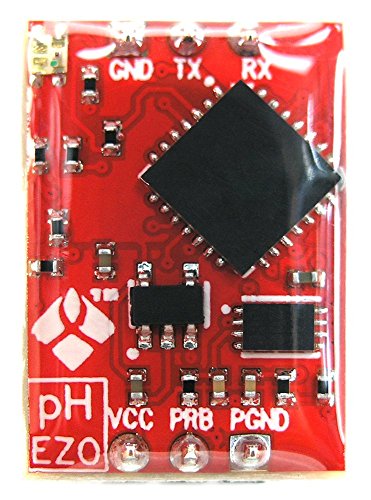
Milwaukee MC510 PRO pH/ORP/EC/TDS/Temp Controller
The MC510 PRO multi-parameter controller offers combined pH/ORP/EC/TDS/temperature control with built-in dosing relays and alarm outputs, making it a cost-effective, all-in-one solution for smaller aquariums or growers who want conductivity and salinity management without multiple separate modules. Financially it can be more attractive than buying separate expansion modules and probes, but it is less specialized for aquarium ecosystems than dedicated modules from Neptune or GHL and may require more manual integration to reach the same automation level. Its technical advantage is consolidated instrumentation and simplified installation, offering good value for users seeking a single-vendor controller approach rather than ecosystem expansion cards or embedded circuits.
Show More Aquarium Conductivity And Salinity Interface Expansion Modules
4-20mA to 0-3.3V Signal Converter Module by DFRobot (DFR0553)
DFRobot's DFR0553 is a low-cost, compact 4-20mA to 0–3.3V converter aimed at makers and prototype aquarium projects that need to feed current-loop sensors into microcontrollers. It is far less expensive than industrial boxes and excellent for rapid prototyping, but it lacks the isolation, calibration and multi-channel integration of products like GHL or Sensorex, so it is best used for development or non-critical monitoring where budget and size are the primary constraints.
Show More Aquarium Dissolved Oxygen Sensor Interface Expansion Modules
Neptune Systems FMM Flow Monitoring Module
The Neptune Systems FMM Flow Monitoring Module provides dedicated flow rate and leak detection for pump lines and integrates tightly with the Apex ecosystem, making it the best-in-class flow-monitoring expansion for aquariums. Compared with the GHL PAB and ProfiLux Expansion Box it is more focused and cost-effective for hydraulic diagnostics and complements Neptune's PM1 and EXM modules by adding specialized flow intelligence not offered by general power or probe expansion devices.
Show More Current Loop And Voltage Input Interface Expansion Modules For AquariumsWhere to buy Neptune Systems FMM Flow Monitoring Module in USA: the trusted retailers we track in this market, with the best price we have observed at each. Prices are checked regularly and can change, and the retailer confirms the final price at checkout.
We may earn a commission on purchases. It never affects our rankings.
$120 – $180
Neptune Systems PM1 Probe Module
The PM1 Probe Module extends probe capacity for Neptune controllers with dedicated probe inputs, on-module signal conditioning tuned for pH/ORP/temperature sensors, and watertight connector options for aquarium environments. It stands out as a budget-friendly, user-focused expansion that simplifies probe management and calibration on Apex systems, although it lacks the broad analog channel count and ultra-high-resolution ADCs of GHL’s PLM-ADIN. For Neptune users who want reliable probe integration with waterproof connections and easy setup, the PM1 delivers strong value without the complexity or cost of larger professional interfaces.
Show More Sensor Multiplexer Hub Expansion Modules For Aquariums
Where to buy Neptune Systems PM1 Probe Module in USA: the trusted retailers we track in this market, with the best price we have observed at each. Prices are checked regularly and can change, and the retailer confirms the final price at checkout.
We may earn a commission on purchases. It never affects our rankings.
$120 – $180
How to Choose the Right Sensor Interface Module
Selecting a high-quality sensor interface module comes down to signal isolation capabilities and native controller compatibility. The best units prevent ground loop interference from other aquarium equipment while offering plug-and-play recognition with your existing ecosystem.
Look for galvanic isolation specs; modules without proper signal isolation will give erratic pH or ORP readings when your aquarium heaters or pumps turn on.
Verify the connector types before buying, as proprietary waterproof locking connectors like M12 or BNC are vastly superior to standard audio jacks for long-term saltwater exposure.
Ignore marketing claims about infinite expandability and instead check the module's onboard calibration storage, which allows you to swap sensors without having to recalibrate the entire main controller.
If you are running industrial-grade sensors, ensure the module specifically supports 4-20mA or 0-10V analog inputs rather than just basic digital temperature probes like the DS18B20.
Frequently Asked Questions
Which sensor module is best for Neptune Apex ecosystem users?
The Neptune Systems PM3 Probe Module is the ideal choice for Apex users because it provides seamless temperature probe scaling and integrates directly with your existing monitoring and alerting system.
Does the Atlas Scientific EZO-pH Circuit support I2C communication?
Yes, the Atlas Scientific EZO-pH Circuit supports UART, I2C, and serial communication, allowing for flexible interfacing with various microcontrollers in your custom aquarium projects.
Is the Milwaukee MC510 PRO worth the 1017.75 dollar price tag?
The Milwaukee MC510 PRO costs 1017.75 dollars, which provides an all-in-one solution that combines pH, ORP, EC, TDS, and temperature control with built-in dosing relays and industrial-grade electronics.
What is the average user rating for the Neptune Systems PM3?
The Neptune Systems PM3 Probe Module holds an average rating of 4.5 stars, reflecting its strong community support and ease of integration for aquarium temperature monitoring.
Conclusion
As aquarium automation continues to evolve across the USA, investing in a reliable sensor interface module is the smartest way to future-proof your temperature and water quality management. We hope this guide has helped you identify the perfect expansion module to keep your aquatic ecosystem thriving and stable. If you need to explore different compatibility options or look for specific probe connections, please use the search bar to refine or expand your results.