

Putter Mounted Stroke Sensors: Top 7 Options in the USA for 2026
Published on Thursday, February 26, 2026
Putter mounted stroke sensors are compact devices that attach directly to your putter to capture tempo, face angle, impact metrics, and 3D motion data. They sync with smartphone or tablet apps to quantify consistency and technique and often provide real-time auditory or haptic feedback to guide practice sessions. For American golfers in 2025 and into 2026 these sensors gained traction because they deliver measurable, repeatable data for short game improvement, fit well with indoor simulators and winter training routines, and are increasingly designed for durability in varied climates. U.S. consumers prioritize ease of setup, cross-platform app support, battery life, data privacy, and compatibility with both indoor launch monitors and outdoor tracking systems. Rising interest in metric-driven coaching, affordable tech for club-level players, and portable training that fits small urban spaces has pushed putter-mounted stroke sensors into mainstream use among recreational players, coaches, and high-performance amateurs. In 2026 the market continues to favor devices that combine simple on‑club mounting, clear drill guidance, and reliable integration with broader practice ecosystems.
Top Picks Summary
Blast Golf Swing Trainer
Blast Golf's putter-mounted sensor is positioned as a best-in-class choice for stroke analysis because it was built specifically for putting and offers high-resolution motion tracking and immediate, coach-friendly metrics. Compared with more general club-tracking systems on this list, Blast prioritizes putter-specific KPIs (toe path, face angle, tempo) at a competitive consumer price, making it technically focused yet financially accessible for golfers who want deep putting feedback without buying a full-club or launch-monitor ecosystem.
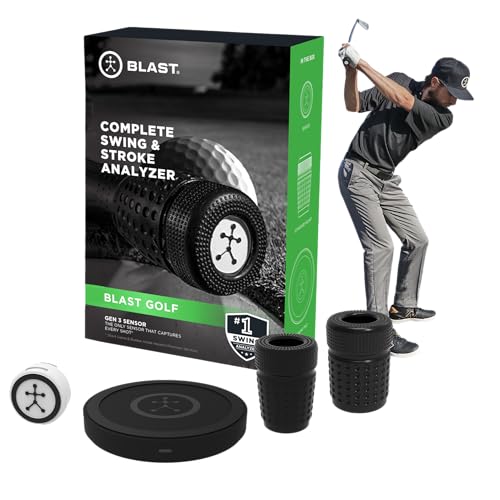
Where to buy Blast Golf Swing Trainer in USA: the trusted retailers we track in this market, with the best price we have observed at each. Prices are checked regularly and can change, and the retailer confirms the final price at checkout.
We may earn a commission on purchases. It never affects our rankings.
$119.95USD
Arccos Caddie Smart Sensors
Arccos Caddie Smart Sensors lead the market as a data-rich, AI-driven system that includes a putter sensor and integrates shot-tracking into an automated caddie experience. While not limited to putting like Blast, Arccos' advantage is its club-by-club statistical context and predictive distance analytics, which add strategic value beyond pure stroke mechanics; this broader capability comes with a higher initial spend and optional subscription for premium caddie features, trading specialized putter detail for holistic course intelligence.

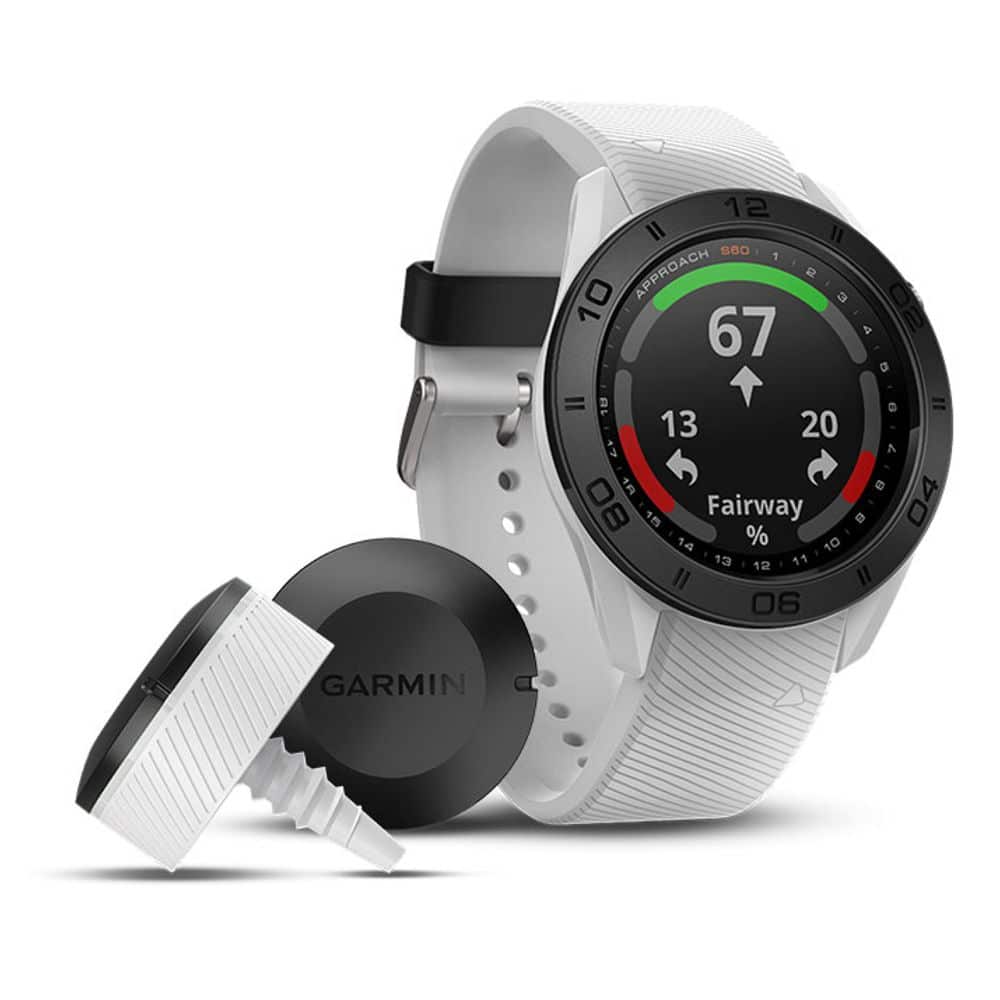
Garmin Approach CT10
Garmin's CT10 club sensors are market-leading for golfers who want seamless integration with a watch-centric golf ecosystem and long battery life in a small, rugged sensor package. They may not offer the same putter-dedicated stroke-metrics as Blast, but their technical strength lies in reliable automatic shot detection, multi-sensor durability and tight integration with Garmin course mapping — a financially sensible pick for players already invested in Garmin devices who prefer a single vendor for hardware and course data.
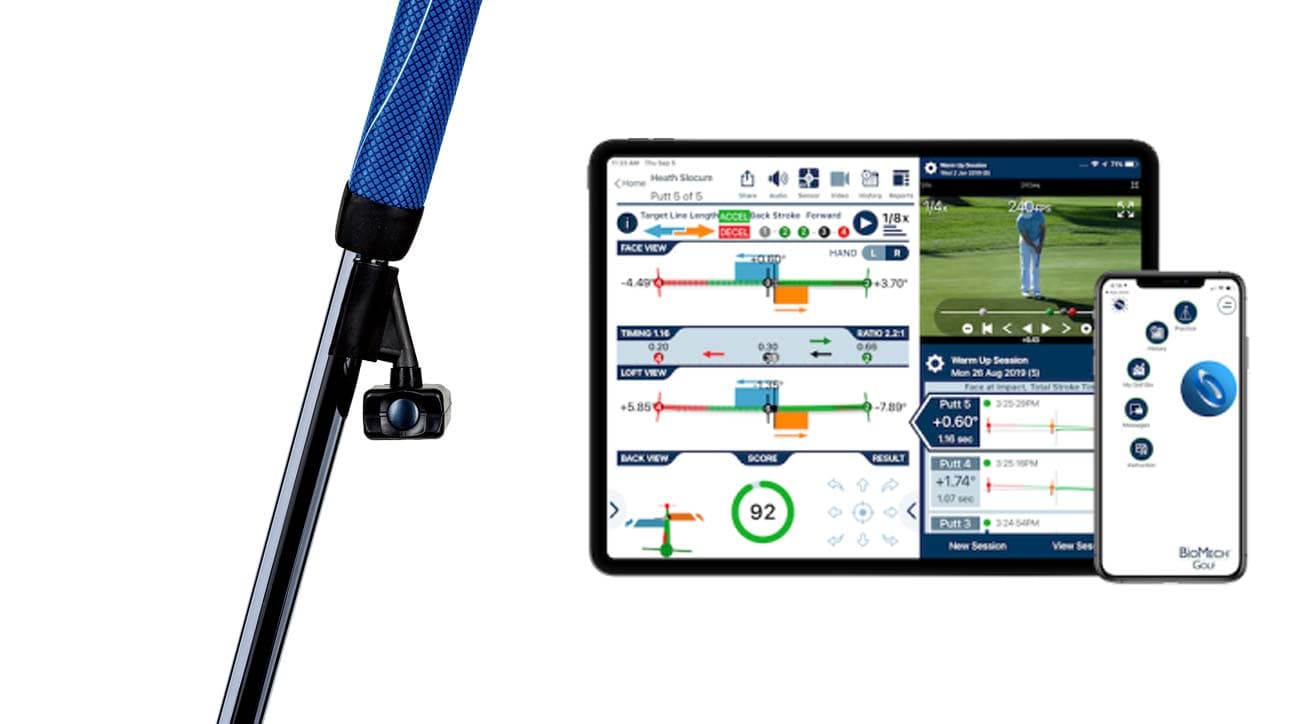
Deadeye Putting Sensor
Deadeye's putter-mounted sensor earns its place for delivering simple, plug-and-play stroke tracking at a lower price point than most competitors, making it an attractive best-in-class option for golfers who want clear putter-head metrics without a steep learning curve. Technically it focuses on reliable IMU-derived stroke data and easy integration with phone apps, which gives it a financial advantage over high-end systems like HackMotion and Rapsodo by lowering the entry cost while still outpacing non-sensor training aids such as PuttOut in objective stroke measurement.
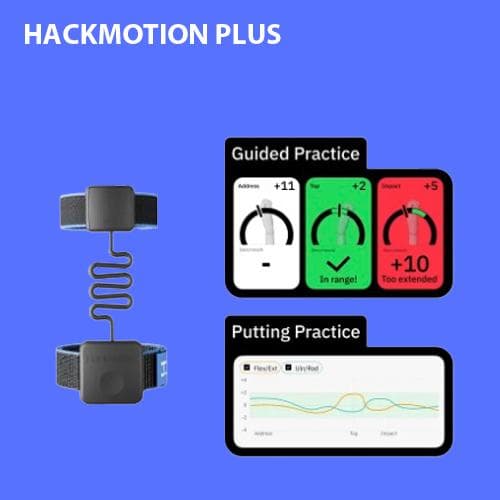
HackMotion Putting Sensor
HackMotion stands out as the market leader for motion-analysis putting sensors thanks to its high-fidelity 3D IMU sensors, premium coaching software, and advanced biomechanical insights that outmatch simpler putter-mounted trackers. Although pricier than Deadeye and complementary to mirror-based trainers like PuttOut, HackMotion's technical depth gives coaches and serious players a measurable performance edge and a stronger long-term value proposition compared with broad-spectrum devices such as Rapsodo MLM2PRO.
PUTTOUT Pressure Putt Trainer with Putting Mirror
PuttOut's Pressure Putt Trainer with Putting Mirror is a purpose-built practice tool that provides tactile feedback and visual alignment rather than raw sensor telemetry, making it an economical and highly practical companion to putter-mounted stroke sensors. Financially and functionally it is much less expensive than electronic sensor systems and serves a different role—offering immediate training feedback and muscle-memory reinforcement that complements data-rich products like Deadeye and HackMotion rather than replacing them.

Rapsodo MLM2PRO
Rapsodo's MLM2PRO brings the strengths of a proven launch-monitor platform to the putting space with camera and radar-derived ball and club metrics, appealing to players who want integrated ball-flight data in addition to stroke information. While it is more costly and oriented toward multi-club use compared with dedicated putter-mounted sensors, its broader technical capabilities and established ecosystem make it a strong choice for golfers and facilities seeking a premium, data-rich solution beyond what mirror-based trainers or single-purpose IMU sensors provide.

Why stroke sensors work: research-backed benefits
A growing body of motor-learning and sports-science research helps explain why putter-mounted stroke sensors improve practice quality and short-term performance. Sensors provide accurate, repeatable feedback that supports focused repetition, objective measurement of tempo and face control, and quicker error correction than unaided practice. For beginners and experienced players alike, the immediate, quantified feedback from sensors accelerates the learning loop and makes coaching more efficient.
Augmented feedback improves skill acquisition: Peer-reviewed motor learning research shows that timely external feedback (audio, haptic, or visual) speeds up corrective adjustments during practice compared with delayed or no feedback.
Consistency over randomness: Studies of putting biomechanics link repeatable tempo and face alignment to lower three-putt rates and improved make percentage from mid-range distances.
Objective metrics aid coaching: Measurable metrics such as stroke path, face angle at impact, and impact tempo let coaches and players remove subjective guesswork and design targeted drills.
Transfer to play: Controlled trials in applied golf research indicate that deliberate practice guided by measurable feedback translates better onto the course versus unguided repetition.
Practical advantage: Research into training adherence shows that compact, easy-to-use devices increase practice frequency—especially for urban and indoor golfers who need portable solutions.
Frequently Asked Questions
Which putter-mounted sensor should I pick for putting practice?
Choose the Blast Golf Swing Analyzer if you want putting-specific analytics, since it attaches to the butt of your putter for 3D stroke metrics like face angle, path, and tempo, with a mobile app that provides instant stroke analytics.
What exact 3D stroke metrics does Blast Golf Analyzer measure?
The Blast Golf Swing Analyzer captures 3D stroke metrics including face angle, path, and tempo, using a sensor that attaches to the butt of your putter to feed those putting measurements into its app.
Is Blast Golf Swing Analyzer cheaper than Garmin Approach CT10?
Yes—Blast Golf Swing Analyzer is $299.99 USDwhile Garmin Approach CT10 costs $299.99 USDso Blast gets you putter-mounted 3D face angle, path, and tempo metrics for less money.
Do Arccos Caddie Smart Sensors include putter tracking?
Yes—Arccos Caddie Smart Sensors include club-mounted sensors (including putter) for automatic shot detection and seamless round tracking that integrates with the Arccos Caddie AI.
Conclusion
Putter mounted stroke sensors are a practical, data-driven way to improve your short game in the USA. This page highlights seven standout options: Blast Golf Swing Analyzer, Arccos Caddie Smart Sensors, Garmin Approach CT10, Deadeye Putting Sensor, HackMotion Putting Sensor, PUTTOUT Pressure Putt Trainer with Putting Mirror, and Rapsodo MLM2PRO. For golfers seeking a dedicated, putter-focused sensor that balances detailed stroke metrics with easy setup, the Deadeye Putting Sensor stands out as the best overall choice among these options. We hope you found what you were looking for — use the site search to refine by budget, platform compatibility, or coaching features if you want to narrow or expand the results.