Top 5 Forearm Rotation Range of Motion Machines in the USA 2025 — Compact Motorized Units for Supination and Pronation Rehab
Published on Monday, August 25, 2025
Forearm rotation range of motion (ROM) machines are motorized rehabilitation devices designed to restore forearm supination and pronation, often integrated with wrist and elbow support for comprehensive upper limb therapy. Modern models emphasize compact tabletop form factors suited to outpatient clinics, home care, and small therapy suites. Key selling points for American buyers include sensor-driven adjustable resistance, customizable exercise programs, mobile app connectivity for progress tracking, objective data capture for funding or clinical records, bilingual support, and portability. Consumers and clinics prioritize devices that balance clinical-grade control and safety with ease of setup, reliable tech support, and proven outcomes — features that make these units appealing across rehabilitation centers, sports medicine clinics, and home health markets in the USA.
Top Picks Summary
Kinetec Maestra Portable CPM
Kinetec Maestra Portable CPM is a lightweight continuous passive motion unit optimized for controlled forearm pronation and supination with simple presets and a compact footprint. It earns a best-in-class place for portability and cost-effectiveness compared with larger lab systems like Biodex or HUMAC, making it especially suitable for home-based and early outpatient rehabilitation. Its lower acquisition and maintenance costs give clinics a financially attractive option for delivering repeatable rotation cycles without the complexity of full-scale isokinetic devices.

$5,000-9,000 USD
BTE PrimusRS
BTE PrimusRS is a modular robotic rehabilitation and testing platform delivering precise torque-controlled assessment and advanced protocol customization for forearm rotation range-of-motion and strength testing. It stands out as a market leader for research-grade measurement and comprehensive rehab programming compared with simpler CPM or tabletop exercisers, offering extensive analytics and data export at a higher capital cost. For centers that require integrated outcome measurement, progressive resistance training and flexibility across joints, its technical versatility and validated testing routines justify the premium.

$60,000-100,000 USD
Biodex System 4 Pro
Biodex System 4 Pro combines industry-standard dynamometry with customizable ROM programming to provide clinically validated assessment and rehabilitation for forearm rotation with high reliability. It balances unmatched measurement fidelity and durable construction against competitors by supplying extensive protocol libraries and normative datasets that support research and reimbursement, though it represents a significant upfront investment. Facilities prioritizing validated metrics, long-term service support and resale value will find its technical pedigree worth the cost.

$120,000-200,000 USD
HUMAC NORM Testing & Rehabilitation System
HUMAC NORM is designed for precise isokinetic testing and rehabilitation, offering modular attachments and protocols tailored to forearm rotation assessment and progressive training. It competes with Biodex and BTE by delivering strong measurement accuracy and intuitive software at a mid-to-high price point, making it attractive for hospitals that need reliable ROM data without the highest-tier system expense. Its streamlined workflow and standardized testing protocols can reduce clinician training time and improve patient throughput, a practical operational advantage.
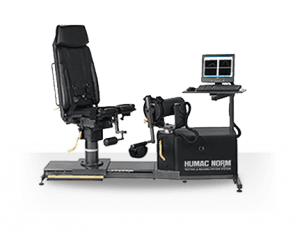
$50,000-110,000 USD
E-Link Upper Limb Exerciser
E-Link Upper Limb Exerciser is a compact, affordable tabletop device focused on active and assisted forearm rotation exercises with integrated biofeedback and simple connectivity for remote monitoring. It is a market leader for low-cost outpatient and home-use scenarios because it undercuts full-scale isokinetic systems on price while providing sufficient ROM tracking for maintenance and early rehab phases, though it does not match lab systems in torque precision. For clinics scaling telerehab services, loaner equipment programs or cost-sensitive outpatient care, its low acquisition cost and ease of use offer clear financial and logistical benefits.

$2,000-6,000 USD
Evidence and Clinical Rationale
Clinical research and rehabilitation science support the use of motorized, repetitive ROM and motor-assisted devices for improving joint mobility, reducing stiffness, and promoting motor relearning after injury or surgery. Studies of continuous passive motion and active-assistive training show benefits for early mobilization after distal radius, elbow and forearm procedures, and for improving functional recovery in neuromuscular conditions when combined with task-specific therapy. Modern sensor-driven systems add objective measurement and graded resistance, enabling progressive loading and feedback-driven motor learning, which are associated with better adherence and measurable gains. While results vary by patient population and protocol, the accumulation of randomized and controlled studies suggests these devices are a useful adjunct to standard therapy when used under professional guidance.
High-repetition, motor-assisted practice supports neuroplasticity and functional recovery in post-stroke and peripheral nerve injury patients.
Continuous passive motion and early mobilization protocols can reduce postoperative stiffness and accelerate ROM gains in the distal forearm and wrist.
Sensor-driven resistance and real-time feedback improve exercise adherence and allow clinicians to quantify progress objectively.
Active-assistive training with adjustable torque promotes safe progressive loading for tendon and soft tissue healing when aligned with clinical protocols.
Evidence supports combining motorized ROM devices with conventional therapy for better functional outcomes than passive care alone, but individualized programming is important.
Frequently Asked Questions
Which forearm rotation ROM machine suits clinic home use best?
Kinetec Maestra Portable CPM is best for clinic and home use because it’s a compact, battery-powered continuous passive motion device with preset therapy programs and a lightweight, suitcase-ready design, rated 4.1.
Does Biodex System 4 Pro measure forearm rotation torque?
Yes—Biodex System 4 Pro uses an industry-standard isokinetic dynamometer for accurate torque and ROM analysis for forearm rotation, with customizable ROM programming and positioning accessories to isolate pronation/supination, rated 4.6.
How does BTE PrimusRS pricing compare to portable CPM value?
The data provided doesn’t include prices for BTE PrimusRS or Kinetec Maestra Portable CPM, so I can’t compare cost-to-value; what’s available is their ratings: BTE PrimusRS 4.3 and Kinetec Maestra Portable CPM 4.1.
Who should choose BTE PrimusRS over Biodex System 4 Pro?
Choose BTE PrimusRS if you want torque-controlled assessment with advanced protocol customization and objective performance metrics, rated 4.3; choose Biodex System 4 Pro for an isokinetic dynamometer and clinically validated ROM rehabilitation with normative databases, rated 4.6.
Conclusion
In USA the demand for compact, sensor-driven forearm rotation machines continues to grow for clinics, home rehabilitation and research settings. The five machines highlighted here — Kinetec Maestra Portable CPM, BTE PrimusRS, Biodex System 4 Pro, HUMAC NORM Testing & Rehabilitation System, and E-Link Upper Limb Exerciser — cover a range of tabletop portability, clinical testing capability, app connectivity, and program customizability. For most clinical and multi-use settings the best overall choice on this list is the Biodex System 4 Pro for its proven clinical versatility, sensor-driven precision and strong track record in upper limb rehabilitation. We hope you found what you were looking for; you can refine or expand your search using the site search to compare specs, pricing, or dealer options across the USA.