

Best EMS Devices 2026: Top 7 Electrical Muscle Stimulation Picks in the USA
Published on Wednesday, February 25, 2026
Electrical Muscle Stimulation (EMS) devices are systems designed to induce muscle contractions for conditioning, recovery, and enhanced circulation. In the USA, EMS appeals to a broad range of users from elite athletes and rehabilitation patients to fitness enthusiasts and busy professionals seeking efficient recovery tools. Consumers evaluate EMS options based on portability, program customization, app connectivity, electrode quality, clinical credibility, and proven outcomes for warmup, active recovery, and supplemental training. Market trends through 2025 emphasize smarter mobile apps, improved electrode adhesives, clearer user guidance, and evidence-based protocols; buyers increasingly prefer models that combine reliable hardware with safety features and clinically informed programs.
Top Picks Summary
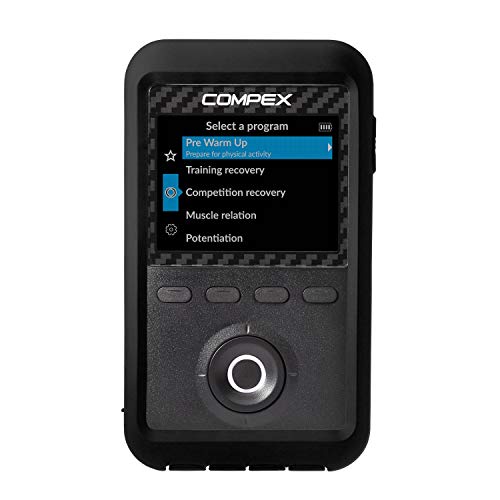
Compex SP 8.0
The Compex SP 8.0 is positioned as a premium, performance-grade EMS unit that stands out with a broad set of training and recovery programs and advanced auto-tuning features for individualized stimulation. It justifies a higher price point compared with mid-range app-driven units by offering deeper configurability and athlete-focused protocols, making it the choice for users who prioritize clinical-style control over the simpler portable options in this list.
Marc Pro Plus
Marc Pro Plus is marketed primarily as a recovery-specialist EMS device that uses a proprietary waveform to prioritize enhanced circulation and muscle recovery with gentle, non-fatiguing activation—appealing to athletes and rehab users focused on recovery outcomes. Financially it sits as a premium recovery investment: pricier than generic app-driven units but justified for users who want a dedicated recovery tool that complements, rather than replaces, training-focused systems like Compex or PowerDot.

PowerDot 2.0 Duo
PowerDot 2.0 Duo stands out as a best-in-class, consumer-focused EMS solution thanks to its polished smartphone app, Bluetooth wireless operation, and intuitive closed-loop programs that make personalized muscle stimulation simple. Compared with the other devices on this list, PowerDot balances modern connectivity and clinical-grade waveforms at a mid-range price, offering better mobile control and portability than the budget-minded iReliev while being far more consumer-friendly than the clinic-oriented Gymna.

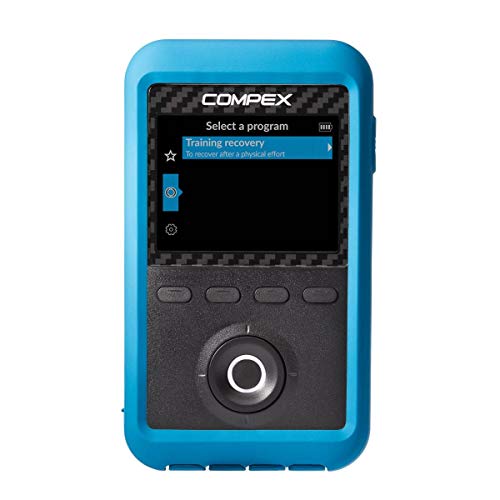
Compex Edge 2.0
The Compex Edge 2.0 is Compex's more affordable, simplified EMS model that retains core training and recovery programs but omits some of the advanced customization found on the SP 8.0, offering a lower-cost entry into the Compex ecosystem. It provides a middle ground for buyers who want trusted brand performance without the premium price, making it more feature-rich than basic single-channel devices yet more economical than the flagship Compex unit.
Therabody PowerDot Uno
Therabody's PowerDot Uno is a single-channel, entry-oriented EMS option that leverages the PowerDot app ecosystem while offering an even lower-cost access point for targeted stimulation and recovery. It undercuts dual-channel units on price and integrates into Therabody's broader recovery lineup, making it a practical choice for users who want a simple, budget-friendly device without the multi-channel complexity of the SP 8.0 or PowerDot 2.0.
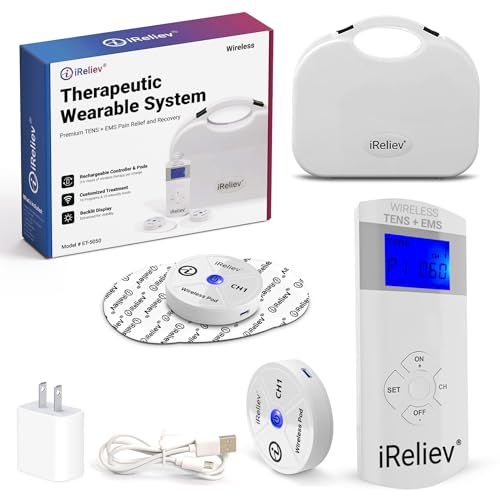
iReliev ET-7070 Wireless TENS + EMS
The iReliev ET-7070 Wireless TENS + EMS is a market-leading value device that combines robust TENS pain-control modes with EMS muscle-stimulation in a single, affordable package largely aimed at home users. Its financial advantage is clear — it delivers both modalities and multiple preset programs at a lower price point than PowerDot and far below clinical systems like the Gymna Duo 200, making it a practical choice when cost-effectiveness and multi-functionality are priorities.
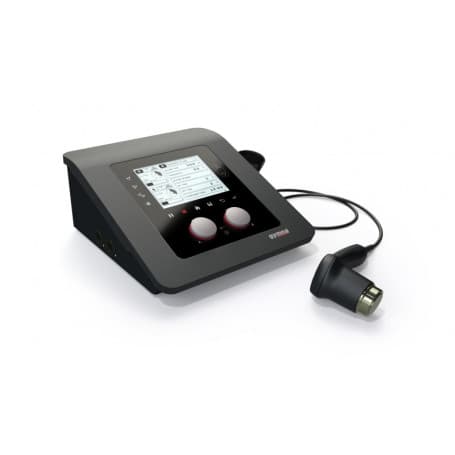
Gymna Duo 200
Gymna Duo 200 is a clinical-grade EMS/TENS platform favored by therapists for its precise parameter control, reliable hardware, and regulatory focus on therapeutic outcomes rather than consumer convenience. Technically superior for professional settings, it offers deeper programmability and stronger sustained output than PowerDot and iReliev, but that clinical performance and build quality come at a higher price and with less emphasis on smartphone-based ease-of-use.
Where to buy Gymna Duo 200 in USA: the trusted retailers we track in this market, with the best price we have observed at each. Prices are checked regularly and can change, and the retailer confirms the final price at checkout.
We may earn a commission on purchases. It never affects our rankings.
$2,000 – $3,500
What the Research Says About EMS
Scientific studies and clinical reviews indicate that EMS can be an effective adjunct for muscle activation, rehabilitation, and circulation when used appropriately. Research supports EMS benefits for preserving muscle mass during immobilization, improving muscle recruitment when paired with voluntary exercise, and reducing perception of delayed onset muscle soreness in some users. Evidence varies by program intensity, electrode placement, and patient population, so best outcomes come from devices that provide validated protocols, adequate intensity control, and clear application guidance.
Muscle activation and strength: Multiple controlled trials show EMS increases muscle recruitment and can complement traditional strength training, especially for targeted muscle groups and rehabilitation settings.
Rehabilitation and atrophy prevention: Clinical studies support EMS for maintaining muscle tone and reducing atrophy during periods of immobilization or reduced voluntary activity.
Recovery and soreness: Meta-analyses report mixed but generally positive effects of EMS on perceived recovery and reduced delayed onset muscle soreness when used after exercise.
Circulation and swelling: Low-frequency stimulation has been shown to promote localized blood flow and help with edema management in some clinical contexts.
Limitations and safety: Benefits depend on correct electrode placement, appropriate intensity, and device quality. EMS is not a replacement for active exercise and should be avoided or used with medical supervision for people with implanted electronic devices, certain cardiovascular conditions, or pregnancy.
Frequently Asked Questions
Which EMS device should I get for recovery?
Marc Pro Plus is a recovery-specialist EMS device, using a proprietary waveform designed to accelerate recovery without fatiguing muscles.
What feature does Compex SP 8.0 have for targeting muscles?
Compex SP 8.0 includes Mi-Scan muscle sensing and strong output for precise, personalized intensity settings.
How does Marc Pro Plus price compare to PowerDot 2.0 Duo?
Marc Pro Plus lists for $1,399.00 USDwhile PowerDot 2.0 Duo’s price isn’t provided, though it’s rated 4.6.
Is PowerDot 2.0 Duo app-controlled via Bluetooth?
PowerDot 2.0 Duo uses a Bluetooth app-controlled system with guided programs and customizable EMS sessions.
Conclusion
In the USA EMS remains a versatile recovery and training tool for athletes, patients, and everyday users. The seven models highlighted here — Compex SP 8.0, Marc Pro Plus, PowerDot 2.0 Duo, Compex Edge 2.0, Therabody PowerDot Uno, iReliev ET-7070 Wireless TENS + EMS, and Gymna Duo 200 — represent the leading balance of portability, clinical features, and app-driven convenience for 2026. For most performance-driven users and those who want industry-leading programs and electrode technology, the Compex SP 8.0 stands out as the best overall choice on this list. We hope you found what you were looking for; if you want to narrow results by budget, portability, clinical features, or app integration, refine or expand your search to compare models and specifications.