

Top 5 Stable Data Loggers and Telemetry Recorders in the USA (2025) — Field-Tested, Regulatory-Ready Picks for Accurate Environmental Monitoring
Published on Monday, August 25, 2025
Standalone and networked data loggers and telemetry recorders capture high-resolution environmental and equipment telemetry with precise timestamping, local storage, and flexible export options. In USA these devices are valued for ruggedness in extreme climates, reliable low-power operation for remote sites, and secure telemetry for traceability and regulatory compliance. Buyers prioritize measurement accuracy, long-term stability, interoperability with SCADA and cloud platforms, and communications options (cellular LTE, LTE-M/NB-IoT, LoRaWAN) that match site connectivity. Additional common preferences include battery backup and solar support, tamper resistance for unattended installations, robust data encryption, clear calibration records, and responsive local support or distributor networks for seasonal and remote deployments.
Top Picks Summary
Campbell Scientific CR1000X
The CR1000X is a professional-grade, highly configurable data logger prized for its ruggedness, extensive I/O and advanced telemetry options, making it the go-to choice when long-term stability and precise instrumentation are required. Compared with the other products on this list it demands a higher upfront investment but often lowers total cost of ownership for complex sites by consolidating many sensors and communication channels into a single, programmable platform. Its industrial certifications, wide operating range, and mature ecosystem give it a technical edge for demanding telemetry and scientific deployments.

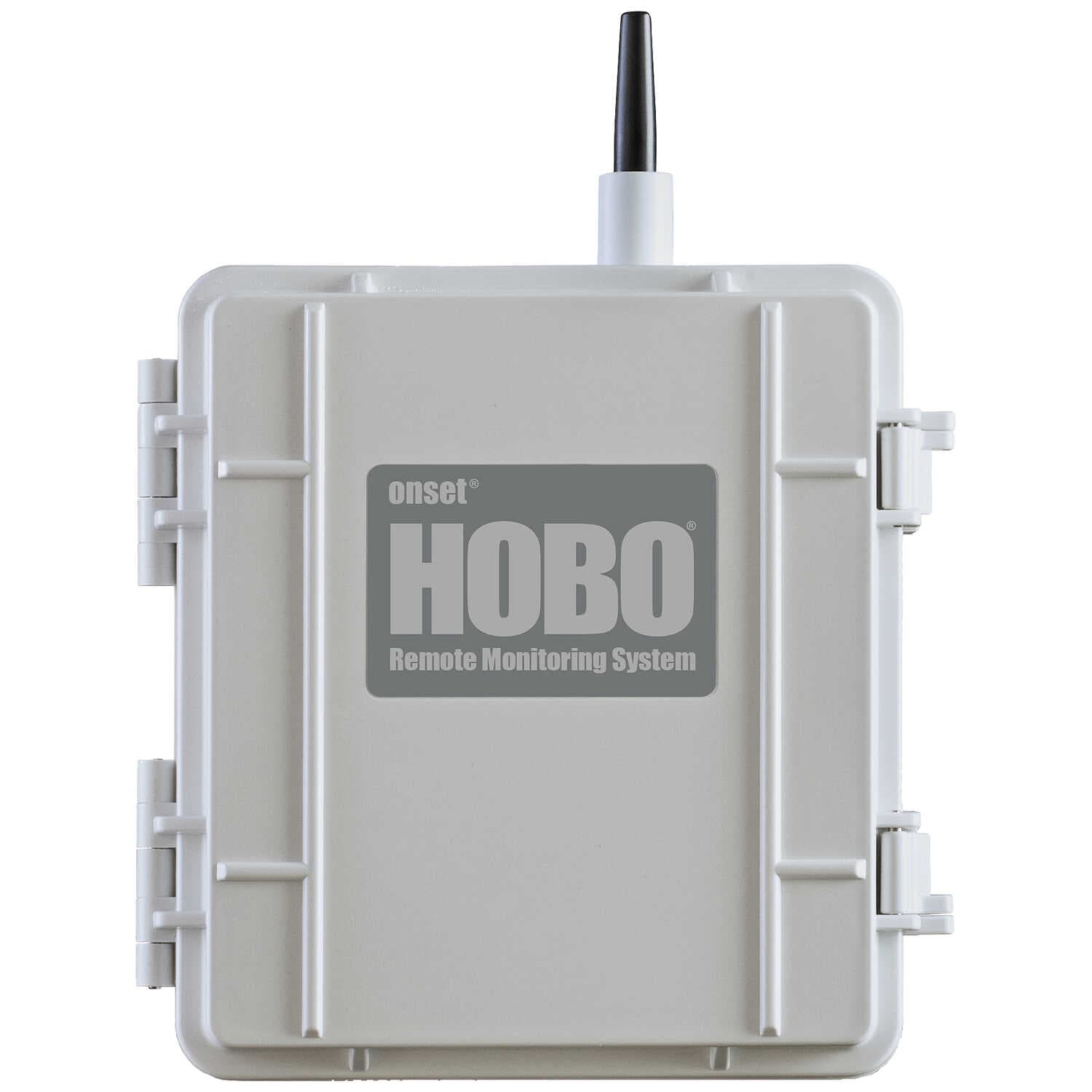
HOBO RX3000 Remote Monitoring Station
The HOBO RX3000 Remote Monitoring Station strikes a balance between ease of deployment and modular capability, offering a broad sensor ecosystem with cloud integration via HOBOlink for remote telemetry and alarm management. It is typically cheaper and faster to install than high-end industrial loggers like the CR1000X while providing more wired and radio sensor flexibility than compact BLE-only units, making it cost-effective for mid-scale environmental monitoring. Its strong software integration and sensor modularity make it attractive where rapid setup and remote data access are priorities.
Onset HOBO MX2301A
The HOBO MX2301A is a small, Bluetooth Low Energy smart data logger optimized for low-cost, short-range monitoring and quick mobile-based downloads via the Onset app. It offers the lowest acquisition cost and simplest deployment among these options, but lacks integrated long-range telemetry and the extensive I/O of telemetry-focused recorders, positioning it as a lightweight choice for spot-checks, indoor environmental monitoring, or distributed sensor networks that rely on gateway devices. For users focused on affordability and ease-of-use in localized settings, it provides excellent technical value despite its limited remote-communication capabilities.

Dickson DicksonOne RL4000
The DicksonOne RL4000 combines straightforward hardware with cloud-first telemetry and alerting, delivering a user-friendly remote monitoring experience aimed at facilities and compliance monitoring. Financially it competes well against larger industrial systems by bundling hardware with cloud services that reduce the need for in-house data infrastructure, and technically it offers reliable alarm workflows and straightforward integrations though it is less configurable at the sensor-hardware level than the CR1000X. It is a strong market leader for organizations that prioritize fast cloud access, centralized dashboards, and predictable subscription-based costs.

Telog Ru-33 LTE
The Telog RU-33 LTE is a compact, low-power telemetry recorder with built-in LTE cellular communications and support for common field interfaces (pulse, analog, and digital), making it ideal for remote unattended sites requiring robust cellular telemetry. Compared with the others, it stands out for turnkey cellular connectivity and optimized power consumption for long deployments, offering a mid-range capital cost with minimal additional comms infrastructure. Its technical focus on reliable cellular telemetry and simplified field wiring makes it especially well suited for infrastructure, water, and utilities monitoring where remote data delivery is paramount.

What Research and Technical Guidance Say About Data Logger Benefits
Scientific studies, industry trials, and technical guidance from national agencies consistently show that accurate, time-synchronized telemetry improves decision-making, regulatory reporting, and incident traceability. Research on low-power wide-area networks and cellular IoT demonstrates reliable long-distance telemetry for remote environmental sensing, while field evaluations emphasize the value of rugged enclosures, power redundancy, and secure data handling to reduce data loss and tampering risks. For beginners, the main takeaway is that methodical selection—matching sensor attributes, communications protocol, and power design to the site—yields the most reliable long-term monitoring outcomes.
Timestamping and synchronized clocks greatly improve data traceability and reduce uncertainties in time-series analysis — essential for regulatory audits and incident reconstruction.
LoRaWAN and other LPWAN technologies provide cost-effective, low-power connectivity for many remote monitoring sites; academic and industry pilots in the USA report kilometer-scale links under typical rural conditions.
Cellular solutions (LTE, LTE-M, and NB-IoT) increase reliability in areas with coverage and simplify deployment where backhaul is needed; studies note trade-offs between power consumption and latency.
Redundant power (battery + solar or AC backup) and local non-volatile storage significantly reduce data gaps during outages according to field trials in harsh environments.
Encrypted telemetry and tamper-resistant housings are recommended practices in technical guidance for applications requiring chain-of-custody and regulatory compliance.
Frequently Asked Questions
Which stable logger should I choose for remote monitoring?
Choose Campbell Scientific CR1000X for remote environmental monitoring because it’s a rugged programmable data logger with CRBasic, extensive I/O (analog, digital, SDI‑12, Modbus, serial), and low-power design with multiple power options; rating is 4.6.
What exact sensor and comms inputs does Campbell CR1000X support?
Campbell Scientific CR1000X supports analog, digital, SDI‑12, Modbus, and serial communications, plus CRBasic for complex measurement, control, and custom algorithms; rating is 4.6.
Is the HOBO MX2301A cheaper than HOBO RX3000?
Onset HOBO MX2301A is listed at $220.00 USDwhile HOBO RX3000’s exact price isn’t provided here; MX2301A is rated 4.3.
Is HOBO RX3000 good for cloud telemetry and alarms?
HOBO RX3000 Remote Monitoring Station includes a built-in web server and optional cellular or Ethernet telemetry for convenient remote access, with cloud integration via HOBOlink for remote telemetry and alarm management; rating is 4.4.
Conclusion
In the American context, robust and secure data logging matters across environmental monitoring, utilities, agriculture, and infrastructure. The five products profiled here—Campbell Scientific CR1000X, HOBO RX3000 Remote Monitoring Station, Onset HOBO MX2301A, Dickson DicksonOne RL4000, and Telog Ru-33 LTE—cover a range of needs from heavy-duty, expandable systems to compact, cellular-ready units. For most professional and regulatory-focused deployments in the United States, the Campbell Scientific CR1000X stands out as the best overall choice because of its proven accuracy, modular expansion, and broad support network. We hope you found what you were looking for; use the site search to refine by connectivity, power options, or specific sensor compatibility if you want to narrow or expand the results.