

2025 USA Guide: Top 5 Backpacking Sleeping Air Pads for Camping and Hiking - Ultralight, Insulated, Field-Tested Picks
Published on Monday, August 25, 2025
Ultralight, compact air pads designed for multi-day backpacking and fastpacking where weight and pack size matter; prioritize insulation, low profile, and durable lightweight materials for three-season use. This category focuses on sleeping air pads engineered to minimize carry weight while maximizing warmth, comfort, and reliability on American trails and backcountry routes. Consumers choose these pads because they strike a balance between thermal performance (measured by R-value), packability, and ruggedness for variable conditions—from coastal rain forests to alpine passes and boreal backcountry. Trends in the American market include a move toward insulated air pads for improved shoulder-season comfort, integrated repairability and eco-friendly materials, and gear optimized for fastpacking. Practical features that drive buying decisions are low packed volume, proven valve systems, reliable insulation (synthetic or trapped air), ease of inflation, and real-world durability under rough campsite use.
Top Picks Summary
Therm-a-Rest NeoAir XLite NXT
The Therm-a-Rest NeoAir XLite NXT is the market-leading choice for backpackers who prioritize the best warmth-to-weight ratio and ultra-compact packability. It holds its position thanks to a proven combination of light materials and reliable insulation that outperforms thicker or cheaper pads on colder nights, though it commands a premium price compared with the more budget-oriented Klymit and Big Agnes options. Compared to Sea to Summit and Nemo, the NeoAir favors minimal grams over plush comfort, making it ideal for fast-and-light hikers focused on high-performance thermal efficiency.

Sea to Summit Ultralight Insulated
The Sea to Summit Ultralight Insulated blends comfort and low weight through air-sprung cell construction that often feels quieter and more conforming than traditional baffle pads. It typically sits slightly below Therm-a-Rest in pure warmth-to-weight but offers a competitive price-to-performance ratio and a bit more on-pad comfort than the simple Klymit Static V2. For backpackers who want comfortable micro-adjustments without a large weight penalty, Sea to Summit is a strong alternative to the NeoAir and a softer, but still lightweight, choice versus Nemo.

Nemo Tensor Insulated
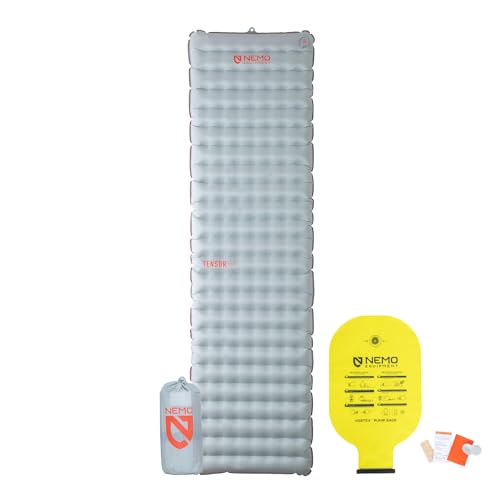
The Nemo Tensor Insulated earns its place by delivering a wider, more stable sleeping surface with body-mapped baffles that reduce roll and improve sleep quality without a large weight penalty. Technically it emphasizes sleeper comfort and stability more than the ultra-minimal NeoAir or the budget Klymit, making it attractive to side-sleepers who value a roomy, cushioned night; it usually lands in the mid-to-premium price band compared with Sea to Summit and Big Agnes. For hikers who prioritize sleep performance over shaving every gram, the Tensor is a practical middle ground between comfort and packability.
Big Agnes Rapide SL Insulated
The Big Agnes Rapide SL Insulated is positioned as an ultralight, value-oriented pad that delivers solid warmth and durable construction at a friendlier price than some premium competitors. Its low-profile design gives good side support and integrates well with Big Agnes sleep systems, offering a technical edge for users who prefer modular gear and a slightly wider surface than the Klymit. It’s a smart pick for overnight trekkers who want reliable insulation and packability without paying top-tier premiums charged by some market leaders.

Klymit Static V2
The Klymit Static V2 is the budget and simplicity leader on this list, offering a low-cost, lightweight pad with a signature V-chamber pattern that provides decent comfort for short trips or warm-weather hikes. While it lacks the higher insulative values and refined materials of the Therm-a-Rest, Sea to Summit, and Nemo insulated models, its affordability and straightforward durability make it an excellent entry-level option for casual backpackers and car campers. Financially it’s the most accessible choice, though those planning cold-weather or multi-night backcountry trips will likely prefer one of the insulated pads above.

Why Insulation, Weight, and Design Matter: Simple Science Behind Air Pads
Design and material choices on air pads are guided by measurable thermal and mechanical properties. Insulation reduces conductive heat loss to the ground; a higher R-value means better resistance to cold ground temperatures. Ultralight design reduces carried mass and improves mobility on long multi-day trips, while low-profile construction reduces wind exposure and improves sleep ergonomics. Field tests and lab assessments used by manufacturers and independent testers use standardized thermal-resistance measurements and real-world trials to evaluate warmth, comfort, and durability. Sleep science and exercise physiology research also links better sleep quality to improved recovery and daytime performance—so investing in a pad that keeps you warm and comfortable pays off for multi-day hikes.
R-value explained: R-value quantifies insulation performance. Higher R-values reduce heat loss to the ground and are important for shoulder-season use.
Thermal conduction: Direct contact with cold ground is the primary cause of core-temperature loss at night; insulation in the pad mitigates that effect.
Sleep and recovery: Research in sleep science and exercise physiology shows improved sleep continuity and thermal comfort support faster recovery during multi-day efforts.
Materials and durability: Advances in synthetic insulation and coated nylon fabrics retain insulating loft when compressed and provide puncture resistance without large weight penalties.
Testing methods: Lab thermal-resistance tests combined with field trials (real campsite use, inflation cycles, and abrasion tests) give a balanced view of pad performance for backpacking contexts.
Frequently Asked Questions
Is Therm-a-Rest NeoAir XLite NXT best for ultralight trips?
Therm-a-Rest NeoAir XLite NXT (4.6 rating) is a strong pick for ultralight backpacking because it prioritizes the best warmth-to-weight ratio with a durable ripstop shell and reliable valve system for quick inflation.
What insulation spec does Sea to Summit Ultralight Insulated use?
Sea to Summit Ultralight Insulated uses Thermolite insulation and air-sprung cell construction, with a multi-function valve for fast setup and compact packing for three-season use.
How does Sea to Summit Ultralight Insulated price compare?
Sea to Summit Ultralight Insulated costs $139.30 USDwith a 4.5 average rating, while Therm-a-Rest NeoAir XLite NXT is $204.56 USD—about $204.56 USDmore for its reflective ThermaCapture layers.
Who should choose Nemo Tensor Insulated over Therm-a-Rest?
Nemo Tensor Insulated (4.6 rating) is for sleepers wanting a wider, more stable surface because its body-mapped baffles reduce roll-off; Therm-a-Rest instead emphasizes reflective ThermaCapture layers and low packed weight.
Conclusion
In the American context, these ultralight, insulated air pads deliver the warmth and packability most backcountry travellers need for three-season trips. This page profiles the Therm-a-Rest NeoAir XLite NXT, Sea to Summit Ultralight Insulated, Nemo Tensor Insulated, Big Agnes Rapide SL Insulated, and Klymit Static V2. For most American backpackers seeking a balance of weight, insulation, and proven field performance, the Therm-a-Rest NeoAir XLite NXT stands out as the best overall choice on this list. Sea to Summit excels if you want minimal weight with solid insulation, Nemo Tensor prioritizes comfort, Big Agnes Rapide SL offers a strong ultralight value, and the Klymit Static V2 is a reliable budget-oriented option. I hope you found what you were looking for — use the site search to refine by weight, R-value, price, or intended use if you want to expand or narrow your options.