

Expert Guide: Chemical Filter Media for Aquariums — Top 5 Options in the USA for 2025 (Which Media Suits Your Tank?)
Published on Thursday, August 21, 2025
Chemical filter media for aquariums are adsorbents and ion-exchange resins — including activated carbon, zeolite, phosphate removers, and specialized synthetic resins — designed to remove dissolved organics, odors, discoloration, and specific contaminants from aquarium water. In USA, hobbyists and pro aquarists choose chemical media for clearer water, improved plant and coral health, and for targeted control of nutrients that fuel algae. Consumer preferences in this market favor longer-life formulations, easy regeneration or replacement, and multi-contaminant cartridges that reduce maintenance time. Regional trends include targeted resin blends for planted and reef tanks, low-dust packaging for cold climates, and combined media cartridges that aim to simplify multi-stage filtration without sacrificing performance.
Top Picks Summary
Seachem Purigen
Seachem Purigen is widely regarded as best-in-class for removing dissolved organic wastes and polishing aquarium water because its synthetic adsorbent selectively targets nitrogenous organics and color-causing compounds while being fully regenerable. Compared with carbon-based media in this list, Purigen’s regenerability and high long-term capacity make it more cost-effective over time despite a higher upfront price, and it pairs especially well with specialized phosphate removers like PhosGuard for a comprehensive chemical approach.

Fluval Zeo-Carb
Fluval Zeo-Carb holds a market-leader position by combining zeolite and activated carbon into a single, multi-functional media that removes ammonia, heavy metals, organics and odors, offering hobbyists convenience and broad-spectrum performance. Technically this dual-action design gives Zeo-Carb an edge over single-purpose products like PhosGuard or ClearMax for general maintenance, and financially it can be cheaper than buying separate media packs while providing faster initial results than granular-only carbon options like API Bio-Chem Zorb.

API Bio-Chem Zorb
API Bio-Chem Zorb is positioned as a cost-conscious, fast-acting activated carbon solution favored for rapid removal of tannins, odors and medication residues; its widespread retail availability makes it an economical choice for frequent changes. Compared to premium, regenerable options such as Seachem Purigen, Bio-Chem Zorb is lower cost per pack but requires more frequent replacement, making it a practical short-term or emergency polishing media rather than a long-term single solution.

Seachem PhosGuard
Seachem PhosGuard is best-in-class for selective phosphate and silicate removal, offering high capacity and predictable performance that helps control algae without stripping trace elements unnecessarily. Its targeted chemistry and long service life distinguish it from general-purpose carbons and from cheaper phosphate removers on the market; although it carries a premium, the reduced replacement frequency and compatibility with organics removers like Purigen can lower lifecycle costs for planted and reef systems.

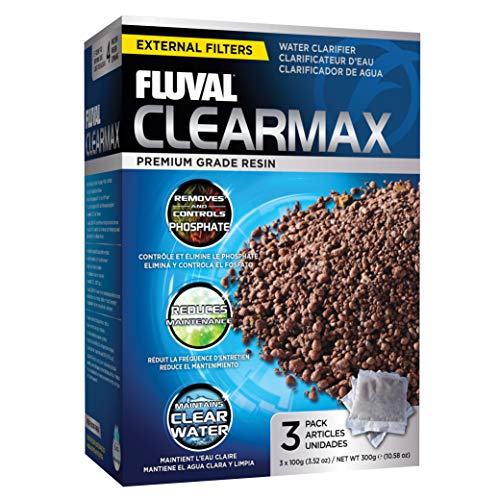
Fluval ClearMax Phosphate Remover
Fluval ClearMax Phosphate Remover is a budget-friendly phosphate control option that delivers quick reduction of phosphates and is convenient for routine cartridge-style changes in common Fluval filters. While not as long-lasting or selective as Seachem PhosGuard, ClearMax provides strong upfront value for hobbyists who prefer lower initial cost and easy interchangeability, and it performs well when paired with broader-spectrum media such as Zeo-Carb or Bio-Chem Zorb for combined nutrient and organic control.
What Research and Practical Evidence Say About Chemical Filter Media
Laboratory work and hobbyist trials consistently show that different chemical media work by distinct mechanisms — physical adsorption, ion exchange, or phosphate sequestration — and that selecting the right type for your water chemistry and biological load matters more than relying on a single 'catch-all' product. Broad findings indicate that activated carbon excels at removing dissolved organics and discoloration, zeolite captures ammonium under the right conditions, and purpose-made phosphate resins or sequestrants reduce soluble phosphate to help control nuisance algae. Regenerable synthetic adsorbents can extend service life and lower long-term cost when used correctly.
Activated carbon adsorbs nonpolar dissolved organics and reduces yellowing and odors; performance depends on carbon grade, particle size, and contact time.
Zeolite and clinoptilolite act as natural ion exchangers that preferentially capture ammonium (NH4+) but can become saturated and need regeneration or replacement.
Phosphate-specific media (resins or granules) chemically bind soluble phosphate; removing phosphate is an effective method to limit many freshwater algal blooms.
Synthetic polymeric adsorbents (like Purigen-style materials) remove a wide range of dissolved organics and are often regenerable with simple chemical baths, improving lifecycle cost and waste reduction.
Combined media cartridges can be effective but require matching flow rates and maintenance intervals; improper use (too-high flow or unopened contact time) reduces efficacy.
Peer-reviewed aquarium and aquaculture studies emphasize measuring water parameters (TOC, phosphate, ammonia) before and after media use to confirm suitability and avoid unintended nutrient imbalances.
Frequently Asked Questions
Which aquarium chemical media should I buy for organics?
Seachem Purigen is the pick for dissolved organics and water “polish,” with an average rating of 4.7; it’s a synthetic polymer adsorbent that’s regenerable with household bleach and restores performance.
What exact spec does Seachem Purigen use for polishing?
Seachem Purigen uses a synthetic polymer adsorbent that effectively removes soluble and insoluble organic waste to improve water clarity, and it’s regenerable with household bleach to restore performance.
Is API Bio-Chem Zorb cheaper than Fluval Zeo-Carb?
Yes—API Bio-Chem Zorb is $13.53 USDversus Fluval Zeo-Carb at $4.87 USD; Zorb is a high-grade activated carbon for discoloration, odors, and dissolved organics, with an average rating of 4.1.
Does Fluval Zeo-Carb remove ammonia and odors together?
Fluval Zeo-Carb combines zeolite and activated carbon to adsorb ammonia (freshwater) and remove organics and odors; it’s rated 4.1 and is provided as granular media for media baskets and reactors.
Conclusion
In USA’s diverse aquarium scene, the right chemical media makes a tangible difference. The five main options covered here — Seachem Purigen, Fluval Zeo-Carb, API Bio-Chem Zorb, Seachem PhosGuard, and Fluval ClearMax Phosphate Remover — each serve distinct roles: Purigen for broad-spectrum dissolved organic removal and regenerability, Zeo-Carb for combined zeolite and carbon action on ammonia and organics, Zorb for polished water clarity via activated carbon, PhosGuard for dedicated phosphate control, and ClearMax for cartridge-style phosphate removal. For most hobbyists seeking a balance of versatility, longevity, and lower ongoing cost, Seachem Purigen is the top choice among these five. I hope you found what you were looking for — you can refine or expand your search using the site search to match products to your tank size, bioload, and target parameters.