

Fixed RFID Controllers 2026 — Top 6 Picks in the USA for Reliable Asset Tracking
Fixed RFID controllers are a cutting-edge solution for organizations looking to enhance monitoring and access control systems. Installed permanently at fixed locations such as dock doors, retail exits, conveyor lines, and storage aisles, these controllers provide continuous tracking and centralized management of RFID readers and antennas. In the United States, adoption has accelerated because fixed systems deliver reliable, hands-free inventory visibility that reduces shrinkage, shortens cycle counts, and improves receiving and shipping accuracy. Buyers in retail, distribution, manufacturing, and healthcare prefer controllers that support global standards like EPC Gen2, integrate with existing WMS and IoT platforms, offer strong read performance and security, and minimize total cost of ownership through scalable deployments and robust support ecosystems. Current market trends favor controllers with edge-processing capabilities, cloud connectivity, flexible API and SDK support, and hardened designs for industrial environments.
Inception's AI took the time to understand this market in the USA · · How we pickWe may earn a commission on purchases. It never affects our rankings.
Top Picks Summary
Impinj R700
The Impinj R700 is positioned as the market-leading fixed RFID controller thanks to very high read accuracy, enterprise-grade scalability, and a mature software ecosystem that simplifies large deployments. While it typically commands a premium price compared with other readers on this list, its superior throughput and management tools can lower long-term operational costs and deliver faster ROI in high-density or mission-critical installations when compared to ThingMagic, Invengo, and Chainway alternatives.

Zebra FX9600
The Zebra FX9600 delivers exceptional performance and versatility, making it the go-to solution for challenging RFID environments. With its high read rates and ability to differentiate between multiple tags, it excels in inventory management and tracking applications. The rugged design and support for various mounting options ensure reliability, even in tough conditions. Zebra's ongoing innovation and support solidify the FX9600's position as a top choice among enterprise users.

Estimated$800 – $1,200
Alien ALR-F800-X
The Alien ALR-F800-X is noted for its superior sensitivity and read accuracy, making it ideal for high-volume RFID applications. This reader is engineered for durability and efficiency, making it suitable for diverse fields like retail, healthcare, and supply chain management. Its ability to read tags at impressive distances enhances operational capabilities. The ALR-F800-X's performance, combined with its user-friendly features, positions it as a market leader in its category.

We may earn a commission on purchases. It never affects our rankings.
Estimated$500 – $900
ThingMagic Sargas
The ThingMagic Sargas delivers top-tier performance in a more cost-competitive package, offering flexible configuration and strong developer tools that make integration straightforward for mid-to-large RFID projects. Compared with the Impinj R700 it often represents a better upfront value for deployments that need high performance without the highest enterprise premium, and it typically offers more adaptable licensing and integration options than some lower-cost Chinese offerings.

We may earn a commission on purchases. It never affects our rankings.
$1,084.00USD
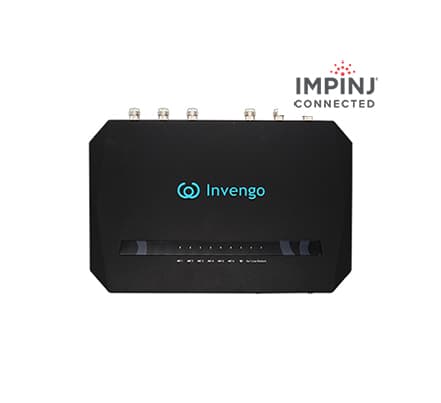
Invengo XC-RF807
The Invengo XC-RF807 is a practical, industrial-focused fixed RFID controller that targets price-sensitive, large-scale deployments with solid reliability and regional support advantages in Asia. It does not usually match the raw throughput or global ecosystem of the Impinj R700 or the developer flexibility of ThingMagic Sargas, but its lower acquisition cost and dependable hardware make it attractive where budget and regional serviceability are primary concerns.
Chainway UR4
The Chainway UR4 is an economical, compact fixed reader aimed at small-to-medium installations and edge use cases where footprint and simplicity matter more than maximum throughput. It competes on cost-efficiency and ease of deployment versus the higher-end Impinj and ThingMagic models, and is a sensible choice when integration with handhelds or other Chainway IoT products and a lower total purchase price are key decision factors.

We may earn a commission on purchases. It never affects our rankings.
$549.00USD
Why fixed RFID controllers work: research-backed benefits
Academic studies, industry reports, and practitioner case studies consistently show that fixed RFID deployments deliver measurable operational improvements when implemented with appropriate infrastructure and processes. Research and field reports from industry bodies such as GS1, coverage in RFID Journal, and peer-reviewed supply chain studies highlight consistent gains in inventory accuracy, labor reduction, and visibility. The evidence emphasizes that controller selection, antenna placement, tag choice, and software integration are all critical to achieving expected outcomes.
Inventory accuracy and visibility: Multiple case studies report substantial improvements in inventory accuracy and location certainty after deploying fixed RFID, enabling more frequent cycle counts and fewer stockouts.
Labor and time savings: Studies show RFID-assisted workflows reduce manual scanning and counting time, freeing staff for higher-value tasks such as exception handling and customer service.
Shrink and loss reduction: Field reports link fixed RFID zones at exits and receiving docks to lower shrink and faster loss detection compared with barcode-only systems.
Faster receiving and fulfillment: Trials in distribution centers demonstrate faster check-in and automated sortation when readers are managed by responsive controllers.
Scalability and ROI: Industry analyses indicate that properly planned fixed RFID systems often pay back initial investment through reduced labor costs and improved inventory turns, especially in large or complex operations.
Technical reliability: Research into reader anticollision, antenna tuning, and environmental resilience supports the need for controllers that offer robust firmware, remote management, and diagnostics.
Frequently Asked Questions
Which fixed RFID controller should I buy for dense warehouse reads?
For dense tag environments, the Impinj R700 is the best fit because it’s an enterprise-grade RAIN UHF fixed RFID controller designed for very high sensitivity and throughput, with an average rating of 4.7.
What exact RFID standard does the Impinj R700 support?
The Impinj R700 supports EPCglobal Class 1 Gen2 (ISO 18000-63) and it also supports LLRP for integration, with an average rating of 4.7.
How does Alien ALR-F800-X pricing compare for value?
The Alien ALR-F800-X is described as cost-effective for small to medium applications, but no exact price is provided in the data; it has an average rating of 4.6.
Is Zebra FX9600 compatible with PoE setups in facilities?
Yes—Zebra FX9600 includes integrated PoE support, so it fits facilities using Power over Ethernet; it’s rated 4.6 and is positioned as easy to integrate with existing systems.
Conclusion
Fixed RFID controllers are an essential component for American businesses that need continuous, accurate asset visibility. On this page you can compare the top six controllers for 2026: Impinj R700, Zebra FX9600, Alien ALR-F800-X, ThingMagic Sargas, Invengo XC-RF807, and Chainway UR4. Each model has strengths—Impinj R700 stands out as the best overall choice for broad enterprise deployments because of its performance, ecosystem support, and developer tools. We hope you found the information you were looking for; use the site search to refine by read range, industrial rating, software platform, or budget to expand or narrow your choices.