Top 5 Small Bromeliads for Paludariums in the USA for 2025: Grower-Tested, Research-Backed Picks to Transform Humid Displays
Published on Thursday, August 21, 2025
Mini bromeliads selected for high-humidity paludariums and mixed aquatic displays. These compact rosette-forming plants are prized by American hobbyists and professional paludarium builders because they combine vivid color, small footprint, and water-holding cups that support microfauna and add living structure to wetland-style setups. In USA, buyers often prioritize species that tolerate steady humidity, fit limited indoor space, ship well from growers, and offer long-lasting color under lower light. Small bromeliads meet those needs: they are visually striking without crowding the tank, create microhabitats for springtails and other beneficial microfauna, and require simple maintenance compared with many larger tropical plants. For urban growers and greenhouse operators in colder regions, these varieties provide reliable performance and aesthetic payoff in controlled paludarium environments.
Top Picks Summary
Neoregelia 'Fireball'
Neoregelia 'Fireball' is highlighted for paludariums because its compact rosette and intense, long-lasting center color provide high-impact focal points without outgrowing a confined vivarium space. Compared with the flatter cryptanthus species in this list it offers a taller, cup-form that holds a little water for microfauna, and it is generally more forgiving than the moisture-sensitive Tillandsia, making it a cost-effective, low-maintenance choice for hobbyists seeking bold color with minimal extra lighting.

Cryptanthus bivittatus 'Pink Starlite'
Cryptanthus bivittatus 'Pink Starlite' earns its place for foreground coverage in paludariums thanks to its star-shaped, ground-hugging habit and strong pink pigmentation that brightens shady corners. It outperforms taller bromeliads here by creating a living carpet and tends to tolerate lower light than many Neoregelias, though it can be slightly slower to bulk up and therefore may command a modest premium from specialty growers.

Neoregelia ampullacea
Neoregelia ampullacea is prized for paludariums due to its small, bulbous rosette that retains moisture yet stays compact, making it excellent for midground placement and for setups that mix submerged and damp substrates. Technically it is easier to fragment and propagate than some rarer cryptanthus cultivars, which makes it cheaper to refill setups or replace specimens compared with more decorative but costlier varieties on this list.

Tillandsia ionantha 'Rubra'
Tillandsia ionantha 'Rubra' brings vertical and textural contrast to paludariums as a true epiphyte that can be mounted on wood or stone without adding substrate, limiting nutrient runoff into the water. Compared with the ground-covering cryptanthus and cup-form Neoregelias, it requires different care—brief drying cycles and brighter light—but its low substrate cost and flexibility for creative placement make it an economical choice for layered displays.

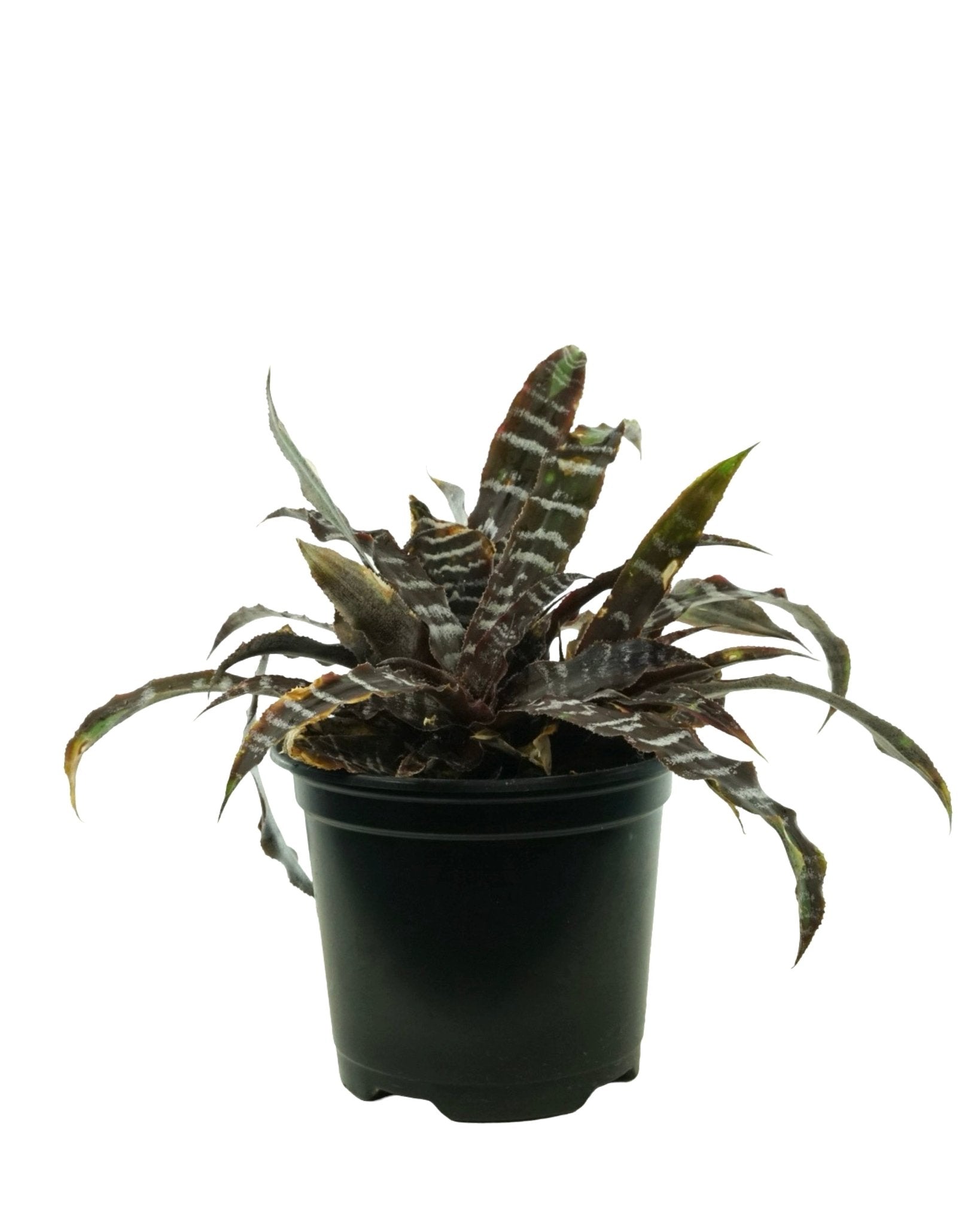
Cryptanthus zonatus 'Zebrinus'
Cryptanthus zonatus 'Zebrinus' is selected for paludariums where visual texture matters; its zebra-like striping creates striking low-level patterning that complements plain-leaved species. While it can be a bit pricier than common Neoregelias because of its distinctive variegation, it is technically well suited to consistently damp, low-light paludarium conditions and provides reliable, long-lasting groundcover that increases perceived plant density without frequent replacements.
Why Small Bromeliads Work in Paludariums — Research-Friendly Summary
Scientific and horticultural literature supports several practical benefits of small bromeliads in humid, mixed aquatic displays. Research on bromeliad ecology and controlled cultivation shows these plants form stable rosettes and phytotelmata (small water reservoirs) that host microfauna, contribute to nutrient cycling inside closed systems, and tolerate continuous high humidity when given moderate light and stable temperatures. For paludarium builders, this means bromeliads can improve biological stability and visual interest with minimal intervention when chosen and placed appropriately.
Phytotelmata ecology: Studies of bromeliad leaf axils show they can host diverse microfauna and microbial communities that help break down organic matter and recycle nutrients within small aquatic systems.
Humidity tolerance: Horticultural trials indicate many Neoregelia, Cryptanthus, and Tillandsia cultivars maintain colorful foliage and growth under sustained high-humidity conditions common in paludariums.
Space efficiency: Small rosette forms give high visual impact per square centimeter, making them suitable for compact displays and layered planting designs.
Low-maintenance benefits: Compared with many epiphytic orchids or moisture-sensitive carnivorous plants, many compact bromeliads tolerate variable light and brief periods of watering neglect, reducing care requirements for hobbyists.
Frequently Asked Questions
Which bromeliad fits small paludariums best for focal color?
Neoregelia 'Fireball' is a strong pick because it has a compact rosette (often under 15 cm) with an intense red center that stays vivid as a focal point in confined vivarium space.
Does Neoregelia 'Fireball' handle high humidity and low substrate?
Yes—Neoregelia 'Fireball' tolerates high humidity and low substrate contact typical of paludarium setups, with a small rosette and an intense red center.
How does Cryptanthus bivittatus 'Pink Starlite' compare on price?
Cryptanthus bivittatus 'Pink Starlite' costs $24.99 USDand delivers a flattened, star-shaped rosette groundcover for bright indirect light and humid conditions, with an average rating of 4.2.
Which small bromeliad makes a water-holding cup in paludariums?
Neoregelia ampullacea forms a bowl-like rosette with a central cup that stores water and supports microfauna, rated 4.3, and it costs $26.00 USD
Conclusion
In United States, these five mini bromeliads bring reliable color and functional microhabitats to paludariums: Neoregelia 'Fireball', Cryptanthus bivittatus 'Pink Starlite', Neoregelia ampullacea, Tillandsia ionantha 'Rubra', and Cryptanthus zonatus 'Zebrinus'. For most paludarium builders seeking a compact, water-holding, and colorful centerpiece, Neoregelia 'Fireball' is the best choice thanks to its vivid rosette, strong cup formation, and compact habit. We hope you found the variety you needed — you can refine or expand your search using the site search to compare sizing, light needs, or propagation methods for any of these cultivars.