

Best Virtual Reality Immersive Displays in the USA for 2026
Published on Thursday, February 26, 2026
Virtual Reality Immersive Displays enable users to enter fully simulated environments, providing a sensory experience that deeply engages the user. As Americans increasingly seek immersive experiences for entertainment, education, and training, these displays have surged in popularity. Improvements in display resolution, tracking accuracy, comfort, and content ecosystems have broadened appeal from hobbyist gamers to enterprise training, therapy, and design applications. Consumers in the USA prioritize ease of use, wireless freedom, image clarity, and a strong software library, which makes hybrid standalone systems and high-fidelity tethered headsets particularly attractive across different market segments.
Top Picks Summary
Meta Quest 3
Meta Quest 3 represents the best balance of price, portability and mixed-reality display performance for immersive VR displays, offering improved optics and color passthrough that materially raise perceived fidelity over prior standalone headsets. Compared with the Apple Vision Pro's premium spatial-computing focus and the Pimax Crystal's PC-tethered ultra-high-resolution approach, Quest 3 wins on standalone convenience and ecosystem value, delivering strong technical upgrades without the Apple-level price or the need for an enthusiast-grade PC.

Apple Vision Pro
Apple Vision Pro is the market leader for premium immersive displays, pairing very high-resolution micro‑OLED panels with precise eye- and hand-tracking and a tightly integrated spatial-computing ecosystem that prioritizes clarity and mixed-reality workflows. It outclasses the Meta headsets on display fidelity and input precision, though those technical advantages come with a significantly higher price and a different target use case compared with the Quest series' affordability and Pimax's raw, tethered resolution.

Where to buy Apple Vision Pro in USA: the trusted retailers we track in this market, with the best price we have observed at each. Prices are checked regularly and can change, and the retailer confirms the final price at checkout.
We may earn a commission on purchases. It never affects our rankings.
$3,499 – $3,499
Valve Index VR Kit
The Valve Index is renowned for its exceptional performance in VR gaming, providing a highly immersive experience with its impressive visuals and ultra-responsive controls. Its advanced finger-tracking technology in the controllers allows for intuitive interactions, enhancing gameplay dynamics. With a high refresh rate and field of view, users enjoy a smoother and more encompassing visual experience. Coupled with the vast SteamVR library, it remains a top choice for serious VR enthusiasts.

Sony PlayStation VR2
The Sony PlayStation VR2 has raised the bar for console-based virtual reality with its cutting-edge technology, which includes a high-resolution display and advanced haptic feedback. The intuitive design and exclusive game titles provide seamless integration with the PlayStation gaming ecosystem. With its eye tracking and adaptive triggers, it creates deeply engaging gameplay experiences that are difficult to find in other VR systems. Furthermore, it enhances the social gaming experience by allowing friends to join in the fun with ease.

HTC Vive Pro 2
The HTC Vive Pro 2 excels in delivering an unparalleled VR experience, featuring stunning 5K resolution visuals that elevate immersion to new heights. Its precise tracking system and wide play area cater to both casual gamers and professionals seeking a high quality experience. With wireless options available, it offers flexibility and freedom of movement. The device’s audio quality is also exceptional, featuring built-in headphones that provide an immersive sound environment.

Meta Quest 2
Meta Quest 2 remains the best budget entry for immersive VR displays thanks to its low cost, mature software library and the largest install base, making it the most accessible option for consumers and developers. Technically it trails Quest 3, Apple Vision Pro and the Pimax Crystal in sensors and display fidelity, but its financial advantage and vast content ecosystem keep it the practical choice for price‑conscious users.
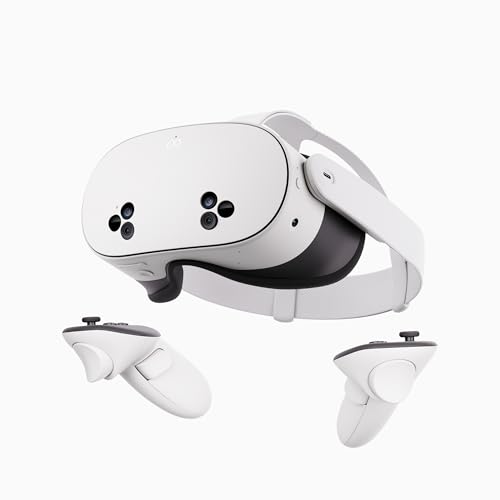
Pimax Crystal
Pimax Crystal targets enthusiasts and prosumers who prioritize the highest native display resolution and the widest field‑of‑view in immersive VR displays, using high‑density panels and premium optics to deliver a near‑PC‑graphics visual experience. Compared with the standalone convenience and broad ecosystems of Meta's headsets and Apple’s spatial platform, Pimax’s technical lead in raw resolution and FOV requires a powerful tethered PC and higher total cost of ownership, making it a niche but unmatched option for simulation and fidelity-focused users.

What Research and Studies Say About Immersive Displays
A growing body of peer-reviewed research and industry studies shows that immersive virtual reality displays can increase engagement, improve knowledge retention, accelerate skill acquisition, and support therapeutic outcomes. Results vary by application, headset quality, and instructional design, but consistent advantages appear when VR is used for experiential learning, hands-on simulation, and exposure-based therapy. For newcomers, the scientific consensus is easy to understand: well-designed VR experiences can make complex information more memorable and improve real-world performance when practice closely mimics the target task.
Learning retention: Controlled studies report higher retention and transfer of skills when learners practice in interactive VR versus passive video or lecture formats.
Training safety and scalability: Simulation in VR lets users rehearse hazardous or expensive tasks at lower cost and risk, improving preparedness for real-world procedures.
Therapeutic benefits: Clinical trials have demonstrated VR utility for exposure therapy, pain management, and certain rehabilitation protocols when guided by trained providers.
Presence and engagement: High-resolution displays and low-latency tracking increase the sense of presence, which correlates with stronger engagement and motivation.
Design matters: Research emphasizes that content quality, user comfort, and ergonomic fit are as important as raw technical specs for achieving measurable outcomes.
Frequently Asked Questions
Should I buy Meta Quest 3 instead of Valve Index?
Meta Quest 3 is the better pick for most people because it’s a standalone headset with inside-out tracking and full-color passthrough mixed reality, at $599.00 USDwith a 4.6 average rating.
What feature makes Meta Quest 3 work without a PC?
Meta Quest 3 is a standalone headset with inside-out tracking, so you don’t need a PC for most VR experiences; it also includes full-color passthrough mixed-reality capability.
Is Valve Index worth $1349.97 for VR gaming?
Valve Index costs $1349.97 and averages 4.7 stars; it’s positioned for VR gaming with excellent tracking tech, high-quality audio, and a comfortable fit for extended play.
Does Apple Vision Pro include eye tracking and hand input?
Apple Vision Pro supports advanced eye tracking and hand-gesture input with visionOS integration, and it averages a 4.7 rating; a specific warranty duration isn’t provided in the listing.
Conclusion
In the USA market for 2026, the top Virtual Reality Immersive Displays to consider are Meta Quest 3, Apple Vision Pro, Valve Index, Sony PlayStation VR2, HTC Vive Pro 2, Meta Quest 2, and Pimax Crystal. Each headset targets different needs: Meta Quest 3 and Meta Quest 2 for accessible standalone use, Valve Index and HTC Vive Pro 2 for high-fidelity PC experiences, Sony PlayStation VR2 for console players, and Pimax Crystal for ultra-high-resolution enthusiasts. The Apple Vision Pro stands out as the best overall choice for users seeking a premium mixed reality display and the highest level of integration and visual quality. I hope you found what you were looking for; use the site search to refine or expand your search by price, platform, or use case.