

Top 6 Energy-Monitoring Smart Plugs in the USA for 2026
Published on Wednesday, February 25, 2026
In today's eco-conscious market, energy-monitoring smart plugs have become essential tools for sustainability-minded and budget-conscious consumers across the United States. These compact devices let users measure electricity use in real time, estimate cost, and automate or remotely switch appliances via smartphone apps or voice commands. Growing consumer demand favors plugs that combine accurate energy measurement, easy setup, broad smart-home compatibility (Matter, HomeKit, Alexa, Google), compact form factors, and robust data privacy. For many buyers the appeal is simple: immediate visibility into wasted standby power, the ability to schedule or remotely cut power to devices left on, and actionable insights that can reduce bills and carbon footprints. As Matter and cross-platform integrations expand in 2026, shoppers increasingly prioritize long-term reliability, clear reporting, and ecosystems that support whole-home energy management.
Top Picks Summary
Emporia Smart Plug with Energy Monitoring
Emporia's Smart Plug with Energy Monitoring earns its place by focusing on highly granular, appliance-level energy telemetry and a cost-effective entry point for whole-home monitoring; it pairs well with Emporia's broader energy-monitoring ecosystem to give detailed usage and historical analytics that many single‑plug rivals don't match. Compared with multi-outlet or ecosystem-first competitors on this list, Emporia emphasizes raw measurement accuracy and affordability, making it the go-to for users who prioritize detailed electricity reporting over smart-home brand lock-in.

TP-Link Kasa Smart Wi-Fi Power Strip KP303
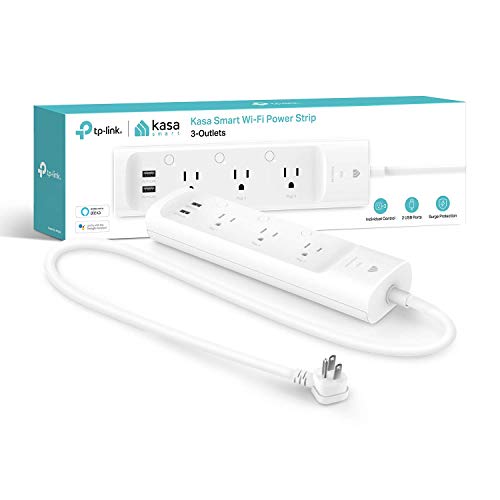
The TP-Link Kasa Smart Wi-Fi Power Strip KP303 stands out as the market leader for multi‑outlet energy monitoring, combining per‑outlet energy readouts, surge protection and three controlled outlets at a price that undercuts many branded single‑plug solutions. Its technical advantage is supporting several device controls from one physical unit, which makes it the best choice for monitoring and managing multiple high‑draw devices at once compared with single-socket plugs in this list.
Eve Energy Smart Plug (Matter)
Eve Energy (Matter) distinguishes itself through tight integration with Apple HomeKit and Matter, delivering local‑first, privacy‑focused energy monitoring with high measurement fidelity — a strong technical and ecosystem advantage for Apple users who want a secure, low-latency experience. While generally pricier than many Wi‑Fi plugs here, its Matter support and emphasis on encrypted local control make it the preferred option for users who value platform-standard interoperability and data privacy over the lowest upfront cost.

Aqara Smart Plug SP-UC01
Aqara's Smart Plug SP-UC01 leverages Zigbee mesh efficiency to provide reliable, low-latency energy reporting and a very compact footprint at a competitive price, making it ideal for dense smart-home deployments where Wi‑Fi bandwidth or range is a concern. Compared with the Wi‑Fi-centric plugs on this list, Aqara’s plug typically offers longer battery‑friendly operation for hubs and sensors and lower network overhead, delivering better scalability and cost-per-node when used with an Aqara or Zigbee gateway.

Meross Smart Wi-Fi Plug Mini with Energy Monitoring MSS315
The Meross Smart Wi‑Fi Plug Mini with Energy Monitoring MSS315 is a budget-friendly performer that balances solid energy-tracking accuracy with broad voice-assistant compatibility and straightforward Wi‑Fi setup, making it a strong value play for mainstream buyers. It sits between premium, privacy-focused options and multi-outlet units by offering good measurement capability at a lower price point than Apple‑centric or hub‑based plugs, appealing to users who want easy cloud integration without sacrificing basic energy insights.

SwitchBot Plug Mini with Energy Monitor
SwitchBot's Plug Mini with Energy Monitor integrates tightly with the SwitchBot ecosystem to offer simple energy tracking plus automation-driven actions (scenes, sensor triggers) that are unique compared with stand‑alone monitors; its modularity and strong automation tools make it especially useful for users who already own SwitchBot sensors and devices. Financially it competes well on price with other Wi‑Fi plugs, but its real technical edge is in creating automated, conditional workflows that turn energy monitoring into actionable control.

What research and studies say about energy-monitoring smart plugs
A growing body of research and energy-efficiency guidance supports the benefits of device-level energy monitoring. Agencies and research organizations find that real-time feedback, automated control, and targeted interventions reduce standby waste and encourage behavior changes that lead to measurable savings. The findings also emphasize that accuracy, placement, and how users engage with feedback determine actual results.
Energy feedback reduces consumption: Multiple reviews of residential feedback studies report that providing users with real-time or near real-time information typically produces modest savings. Many consumers see single-digit to low-double-digit percentage reductions when they act on insights or automate devices.
Standby power and phantom load: Research shows a meaningful share of household energy can come from devices left in standby. Smart plugs are an effective, low-cost method to eliminate phantom loads for specific appliances.
Load shifting and peak-time management: Studies and utility programs indicate that shifting discretionary loads away from peak hours lowers bills and grid strain. Smart plugs that support scheduling and automation make load shifting accessible for many device types.
Accuracy and measurement caveats: Scientific evaluations note that plug-level meters are generally reliable for detecting relative changes and estimating use, but absolute accuracy varies by device design and the appliance's power profile. For precise research-grade metering, dedicated meters are preferred.
Behavior plus automation gives the best results: Evidence suggests combining automated rules (schedules, geofencing) with user feedback increases sustained savings compared with feedback alone.
Privacy and data use: Independent guidance from consumer groups urges transparency about data collection and local versus cloud processing. Look for clear privacy policies and options to limit data sharing.
Frequently Asked Questions
Which energy-monitoring smart plug suits Apple Home users?
Eve Energy Smart Plug (Matter) is the best match for Apple Home users because it has native Matter and Thread support with HomeKit/Siri integration, offers real-time watts plus kWh history, has a 4.5 average rating, and costs $76.95 USD
Does the TP-Link Kasa KP303 track per-outlet energy?
Yes—TP-Link Kasa Smart Wi-Fi Power Strip KP303 includes three individually controlled smart outlets with per-outlet energy monitoring, supports the Kasa app plus Alexa and Google Assistant, has a 4.7 average rating, and is $29.99 USD
Is Emporia Smart Plug with monitoring cheaper value?
At $11.99 USDEmporia Smart Plug with Energy Monitoring is the cheaper value pick because it delivers real-time energy monitoring and cumulative kWh tracking in the Emporia app, with Alexa and Google Assistant voice control, and has a 4.6 average rating.
Do these plugs support Alexa and Google Assistant?
Emporia Smart Plug with Energy Monitoring supports Alexa and Google Assistant, and TP-Link Kasa Smart Wi-Fi Power Strip KP303 also supports Alexa and Google Assistant; Eve Energy Smart Plug (Matter) focuses on Matter/Thread with HomeKit/Siri, with a 4.6/4.7/4.5 ratings.
Conclusion
Energy-monitoring smart plugs are a practical, affordable first step toward smarter, greener homes in the USA. The top picks on this page each address different needs: Emporia Smart Plug with Energy Monitoring is a strong all-around choice for detailed monitoring and integration; TP-Link Kasa Smart Wi-Fi Power Strip KP303 adds multiple monitored outlets for media centers and workstations; Eve Energy Smart Plug (Matter) focuses on privacy and first-class Matter/HomeKit compatibility; Aqara Smart Plug SP-UC01 offers compact design and solid automation at a value; Meross Smart Wi-Fi Plug Mini with Energy Monitoring MSS315 balances price and reliable energy reporting; and SwitchBot Plug Mini with Energy Monitor integrates well with simple automation ecosystems. Overall, the Emporia Smart Plug with Energy Monitoring stands out as the best choice for most users who want accurate data and flexible integrations. We hope you found what you were looking for; use the search to refine by price, platform compatibility, or expand your options by features such as multi-outlet strips, HomeKit or Matter support, or commercial-grade monitoring.