

Top 7 HDR Gaming Monitors in the USA for 2026
Published on Wednesday, February 25, 2026
Immerse yourself in thrilling gaming experiences with HDR gaming monitors that deliver stunning visuals and responsive gameplay. HDR monitors raise contrast and color volume so bright highlights pop and deep blacks remain detailed, producing a more lifelike and engaging game world. In the USA, gamers increasingly favor HDR-capable displays because modern titles, competitive esports, and cinematic single-player games all benefit from higher peak brightness, wider color gamuts, and improved local dimming or self-emissive panels. Buyers tend to choose based on a mix of factors: peak brightness and local dimming for impactful HDR, panel type such as mini-LED, QD-OLED, or OLED for contrast and color fidelity, refresh rate and latency for competitive play, and connectivity with PCs and consoles. Pricing and size preferences vary by use case, with desktop gamers often seeking 27 to 32 inch models that balance pixel density and field of view, while sim racers and immersive players may choose ultrawide or larger 32-inch screens. Overall, HDR gaming monitors have become an essential upgrade for serious gamers and creators who want richer visuals without sacrificing responsiveness.
Top Picks Summary
Samsung Odyssey Neo G8 S32BG85
The Samsung Odyssey Neo G8 S32BG85 leads this HDR gaming list by packing a high‑refresh 4K Mini‑LED panel with aggressive local dimming and extreme peak brightness, delivering punchy HDR highlights and strong competitive performance. Compared with the OLED and IPS models here, it offers superior sustained luminance and burn‑in immunity, making it the go‑to if you prioritize blinding HDR highlights and long‑term reliability despite its premium price.

LG OLED 27" UltraGear 27GR95QE-B
The LG 27GR95QE-B UltraGear OLED is best‑in‑class for absolute contrast and color fidelity thanks to per‑pixel OLED blacks and near‑instant pixel response that excel in fast HDR gaming and creative work. Versus the mini‑LED and QD‑OLED entries, it trades some sustained peak brightness for perfect blacks and minimal motion blur, offering exceptional image quality at a premium while requiring the usual OLED care to manage burn‑in risk.

Alienware AW3423DWF
The Dell Alienware AW3423DWF (Alienware) dominates the ultrawide HDR segment with a QD‑OLED curved panel that delivers immersive field‑of‑view, deep blacks and vivid color — ideal for sims and story‑driven titles. It provides a different value proposition than the 27–32" panels here by prioritizing immersion and color volume over sheer pixel density or the highest refresh ceilings, often giving better per‑inch immersion at a competitive price compared with larger 4K mini‑LED alternatives.

ASUS ROG Swift PG27AQDM
The ASUS ROG Swift PG27AQDM targets competitive HDR gamers by combining a very high refresh rate with Mini‑LED local dimming and advanced gaming features like adaptive sync and extreme low input lag. It aims to sit between OLED and traditional LCD offerings—delivering much of OLED's speed and contrast advantages from FALD while avoiding burn‑in—so buyers get a technical high point for latency and HDR tone without the long‑term risks of organic panels, at a flagship price.

Sony INZONE M9
The Sony INZONE M9 emphasizes cinematic HDR fidelity and console‑centric integration, offering carefully tuned color science, effective full‑array local dimming and PlayStation‑friendly features that make HDR games look closer to their creators' intent. Compared with the more aggressively spec'd competitive panels, it prioritizes HDR tone mapping and ecosystem value over the highest refresh numbers, positioning it as a premium yet strategically priced option for console‑first and visual‑quality focused gamers.

Gigabyte M32U
The Gigabyte M32U is the value leader for 4K HDR gaming, delivering a large high‑resolution IPS panel with HDMI 2.1, solid responsiveness and extras like a built‑in KVM at a far lower price than mini‑LED and OLED flagships. While it cannot match the extreme peak brightness or infinite contrast of mini‑LED and OLED models, it offers the best price‑to‑performance tradeoff for gamers who want 4K HDR capability and practical desktop features without paying flagship premiums.
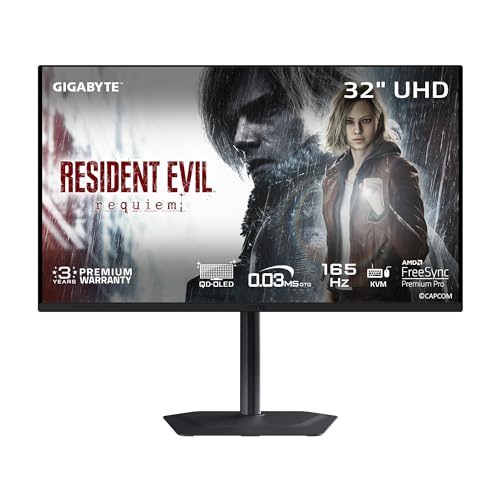
MSI MAG 321UPX QD-OLED
The MSI MAG 321UPX QD‑OLED brings big‑panel QD‑OLED color and deep blacks to a desktop‑friendly size, making it a top choice for those who want OLED‑level contrast with expanded color volume. Financially it often undercuts boutique OLED alternatives while outperforming IPS/mini‑LEDs in color and black level for HDR content, though it shares OLED tradeoffs such as burn‑in considerations and different sustained brightness behavior compared with Mini‑LED leaders.

Why HDR Matters for Gaming: Research and Practical Evidence
Scientific research in vision science and display engineering explains why HDR improves the visual experience. HDR increases the dynamic range of luminance values a display can reproduce, which aligns better with how the human visual system perceives contrast and detail across bright and dark regions. Display technology studies and industry testing also show that wider color gamuts and higher peak luminance improve perceived realism and detail in textured and high-contrast scenes. In practice, competitive gaming research highlights the importance of low latency and high refresh rates alongside HDR, because visual fidelity must pair with responsiveness for the best performance.
Contrast and visibility: Human vision is highly sensitive to luminance range. HDR expands that range, making bright highlights and shadow detail more distinguishable than with standard dynamic range displays.
Color volume and gamut: Studies of color perception show that wider gamuts and higher color volume allow for more saturated, believable hues in games, which enhances immersion in vivid environments.
Performance and latency: Esports and user-experience research emphasize that HDR benefits should not compromise refresh rate or input lag. The best HDR gaming monitors combine high refresh rates with low latency for competitive play.
Objective metrics: Measurable display attributes such as peak brightness (nits), local dimming zones or self-emissive pixel performance, contrast ratio, and color coverage (sRGB, DCI-P3) are reliable predictors of HDR quality.
Frequently Asked Questions
Which monitor should I buy for fast HDR gaming?
Samsung Odyssey Neo G8 S32BG85 fits fast HDR gaming best, with a 32-inch 4K Mini-LED panel, ultra-fast 240Hz refresh rate, and advanced local dimming for punchy HDR highlights; it’s rated 4.6.
Does LG 27GR95QE-B support true blacks for HDR?
Yes—LG 27GR95QE-B UltraGear OLED uses a 27-inch OLED panel for true blacks and instantaneous pixel response, rated 4.7, with up to 240Hz refresh rate and G-Sync/FreeSync compatibility.
Is the Alienware AW3423DWF worth paying $685.08?
At $647.71 USDDell Alienware AW3423DWF delivers a 34-inch QD-OLED ultrawide at 3440x1440 with deep contrast and vivid HDR color, plus a high refresh rate and adaptive-sync performance; it’s rated 4.5.
Do these monitors have warranty coverage listed anywhere?
Warranty duration isn’t provided for Samsung Odyssey Neo G8 S32BG85, LG 27GR95QE-B UltraGear OLED, or Dell Alienware AW3423DWF in the available listing data.
Conclusion
From compact, fast OLED screens to bright mini-LED panels, the 2026 HDR monitor landscape in the USA offers options for every gamer. Top picks include the Samsung Odyssey Neo G8 S32BG85, LG 27GR95QE-B UltraGear OLED, Dell Alienware AW3423DWF, ASUS ROG Swift PG27AQDM, Sony INZONE M9, Gigabyte M32U, and MSI MAG 321UPX QD-OLED. For most players seeking the best balance of HDR brightness, size, and competitive performance, the Samsung Odyssey Neo G8 S32BG85 stands out as the best choice. If you did not find exactly what you need, you can refine or expand your search using the site search to focus on screen size, panel type, or latency. We hope you found what you were looking for and that this guide helps you pick the right HDR gaming monitor for your setup.