

Best High-Performance Engineering Workstations in the USA — Top 7 Picks for 2026
Published on Thursday, February 26, 2026
High-Performance Engineering Workstations are engineered to run complex simulations, large CAD assemblies, finite element analysis, and data-intensive computational tasks reliably and quickly. In the USA market for 2026, demand has grown for both portable workstation laptops and tower/desktop systems that combine multi-core CPUs, workstation-class GPUs, ECC memory, and robust cooling to minimize throttling under sustained loads. Professionals in architecture, product design, computational engineering, and scientific research prioritize systems with ISV certifications, expandability, long-term support, and proven stability; these preferences drive purchases toward manufacturers and custom builders that balance raw performance with reliability, service, and compatibility with professional software ecosystems.
Top Picks Summary
HP Z8 Fury G5 Workstation
The HP Z8 Fury G5 is positioned as the top-of-line engineering workstation for extreme, multi-socket workloads — it delivers massive CPU and memory scalability ideal for large-scale CFD, FEA and rendering jobs. Compared with the other systems on this list it trades a higher acquisition cost for unmatched raw capacity, enterprise-class ISV certifications and long lifecycle support, making it the best choice when absolute throughput and future headroom matter for high-performance engineering workstations.

Dell Precision 7875 Tower
The Dell Precision 7875 Tower targets engineers who need very high core counts with a more cost-effective upgrade path, emphasizing strong AMD multi-core performance and broad ISV validation. Versus the HP Z8 it offers a better price/performance balance for many simulation-heavy workflows and greater ease of field serviceability than compact systems like the Mac Studio, while still supporting significant expansion for demanding engineering workloads.

Lenovo ThinkStation PX
The Lenovo ThinkStation PX delivers a balanced mix of high-end performance, reliability and thermal design that suits prolonged engineering compute tasks with predictable costs. It sits between HP's extreme-capacity approach and Dell's cost-optimized towers by providing solid expandability and competitive pricing with strong ISV compatibility, making it a pragmatic choice for teams that need sustained performance without paying a premium for absolute maximum scale.

Apple Mac Studio
The Apple Mac Studio with M2 Ultra offers exceptional single-socket performance and industry-leading power efficiency, delivering excellent real-world throughput for workloads optimized for macOS and Apple-optimized applications. Compared to tower workstations it shines on energy and space efficiency and often gives superior per-watt performance, though it is less upgradeable and can be limited on ISV-certified engineering stacks and raw multi-socket scaling required by the largest simulations.

BOXX APEXX W4
The BOXX APEXX W4 is tailored for content creators and engineers who need incredible power in a small footprint. It features cutting-edge AMD Ryzen or Intel Core processors combined with professional-grade GPUs, allowing users to tackle intensive simulations and visualizations. With its customizable configurations and reliable performance, this workstation stands apart as one of the best choices for demanding workflows. BOXX's commitment to user satisfaction is evident through exceptional support and service.

Where to buy BOXX APEXX W4 in USA: the trusted retailers we track in this market, with the best price we have observed at each. Prices are checked regularly and can change, and the retailer confirms the final price at checkout.
We may earn a commission on purchases. It never affects our rankings.
$3,000 – $4,500
Puget Systems Xeon W Workstation
Puget Systems builds tuned Xeon W workstations that prioritize application-specific benchmarking, acoustic performance and thermal stability for engineers who need predictable results. Unlike big OEMs, Puget emphasizes transparent benchmarking and custom tuning to squeeze best-in-class performance per dollar for targeted engineering applications, offering superior small-team support and configurability though with a smaller global support footprint than HP or Dell.
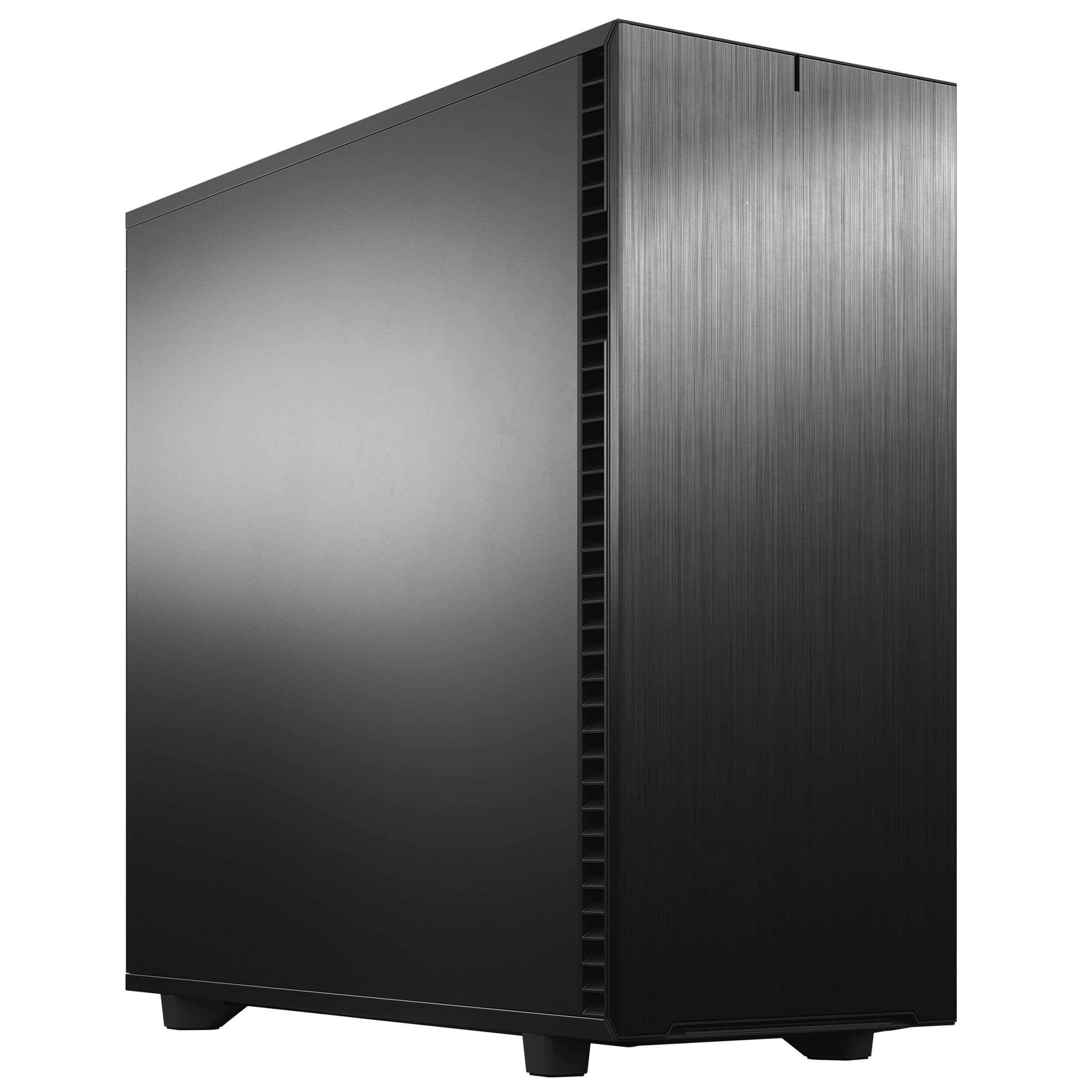
Where to buy Puget Systems Xeon W Workstation in USA: the trusted retailers we track in this market, with the best price we have observed at each. Prices are checked regularly and can change, and the retailer confirms the final price at checkout.
We may earn a commission on purchases. It never affects our rankings.
$2,500 – $15,000
Velocity Micro ProMagix HD80a
The Velocity Micro ProMagix HD80a is a boutique high-end workstation that focuses on aggressive value, rapid build times and flexible cooling choices for demanding engineering workloads. It competes with other custom builders by often undercutting OEM pricing while delivering comparable components and performance, making it an attractive option for cost-conscious teams that still require certified, high-performance engineering workstations though it may lack the enterprise service coverage of larger vendors.
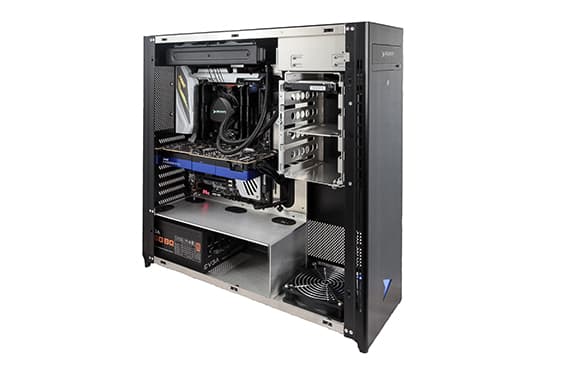
Where to buy Velocity Micro ProMagix HD80a in USA: the trusted retailers we track in this market, with the best price we have observed at each. Prices are checked regularly and can change, and the retailer confirms the final price at checkout.
We may earn a commission on purchases. It never affects our rankings.
$2,500 – $10,000
Why research and benchmarks support workstation investments
A range of industry benchmarks and academic studies show that workstation-grade hardware and validated software stacks deliver measurable productivity gains for engineering workflows. Benchmarks such as SPECworkstation, industry white papers, and university research consistently demonstrate that more cores, higher memory bandwidth, GPU acceleration, and system-level validation reduce run times for simulations and enable larger models to be handled accurately and predictably.
Parallel processing and multi-core CPUs often reduce simulation and render times substantially; real-world speedups depend on software parallelization and can range from modest improvements to multi-fold gains.
GPU-accelerated solvers and GPU rendering frequently outperform CPU-only approaches for appropriate workloads, with many engineering tools offering native GPU support.
ECC memory and workstation-class storage reduce the risk of silent data corruption during long runs, improving result integrity for critical engineering calculations.
ISV certifications (for software like ANSYS, SolidWorks, Siemens NX, and others) improve stability and predictability, minimizing interruptions caused by driver or compatibility issues.
Thermal design and power delivery matter: sustained performance under long workloads depends on cooling and system architecture as much as on peak clock speeds.
Frequently Asked Questions
Which workstation should I buy for large CFD and FEA jobs?
Choose the HP Z8 Fury G5 Workstation for extreme multi-socket workloads, since it supports dual-socket Intel Xeon Scalable processors and scales up to 1.5TB+ ECC memory for massive CPU and memory capacity; it has an average rating of 4.7.
Does the Lenovo ThinkStation PX support dual Xeon CPUs and GPUs?
Yes— the Lenovo ThinkStation PX can be configured with dual Intel Xeon Scalable CPUs and top-tier NVIDIA professional GPUs, and it’s optimized and certified for CAD, CAE, rendering, and other professional engineering software; rating is 4.5.
How does the Lenovo ThinkStation PX price compare to HP Z8 Fury G5?
The Lenovo ThinkStation PX lists at $3,899.00 USDwhile the HP Z8 Fury G5 Workstation lists at $5,202.21 USD(with 10% discount listed), so you pay less for a balanced dual-Xeon/NVIDIA professional GPU workstation versus extreme dual-socket scaling.
Is the Dell Precision 7875 Tower good for simulation engineers needing cooling?
The Dell Precision 7875 Tower is aimed at simulation-heavy engineering work with robust cooling for sustaining high TDP CPUs and workstation GPUs, plus enterprise-class support and engineering/simulation certifications; it’s rated 4.6.
Conclusion
This roundup highlights seven leading engineering-focused workstations available in the USA: HP Z8 Fury G5 Workstation, Dell Precision 7875 Tower, Lenovo ThinkStation PX, Apple Mac Studio M2 Ultra, BOXX APEXX W4, Puget Systems Xeon W Workstation, and Velocity Micro ProMagix HD80a. Each model brings strengths for different workflows — from mobile or compact power in the Mac Studio M2 Ultra to highly expandable, server-class options like the Dell Precision 7875 Tower and the Puget Systems Xeon W Workstation. For most engineering professionals seeking the best balance of raw performance, expandability, and enterprise support in 2026, the HP Z8 Fury G5 Workstation stands out as the top choice. We hope you found the comparison useful; you can refine or expand your search using the site search to match specific software needs, budget, or form factor preferences.