

Order Picking Robots 2026: Top 7 Picks for USA Warehouses
Published on Thursday, February 26, 2026
Order picking robots are essential for streamlining fulfillment in modern warehouses across the USA. These picking robots autonomously or collaboratively gather items for customer orders, improving speed, accuracy, and throughput while reducing labor costs and repetitive strain injuries. Driven by persistent e-commerce growth, tight labor markets, and greater demand for fast delivery windows, American operations increasingly prefer solutions that are scalable, easy to integrate with existing warehouse management systems, and capable of handling mixed-SKU environments. Buyers value reliability, predictable ROI, minimal disruption during installation, fleet orchestration features, and strong vendor support. Today’s picking robot platforms also emphasize data visibility and continuous optimization, enabling operators to reduce travel time, lower error rates, and redeploy staff to higher-value tasks.
Top Picks Summary
Locus Robotics LocusOne
The LocusOne by Locus Robotics revolutionizes warehouse automation with its advanced technology and efficiency. It stands out due to its unique ability to work collaboratively alongside human workers, optimizing workflows like no other. Equipped with state-of-the-art navigation and real-time data analytics, it offers exceptional reliability and performance. This innovative solution keeps productivity high while maintaining versatility and ease of use.

Where to buy Locus Robotics LocusOne in USA: the trusted retailers we track in this market, with the best price we have observed at each. Prices are checked regularly and can change, and the retailer confirms the final price at checkout.
We may earn a commission on purchases. It never affects our rankings.
$20,000 – $30,000
Geek P800
The Geek+ P800 is a market leader in smart logistics solutions, boasting superior adaptability and speed. What sets it apart is its innovative modular design, allowing for easy integration into existing systems and processes. With advanced AI capabilities and precise navigation, the P800 enhances operational efficiency and reduces costs. Its scalable technology makes it suitable for a wide range of industries, from retail to manufacturing.

Where to buy Geek P800 in USA: the trusted retailers we track in this market, with the best price we have observed at each. Prices are checked regularly and can change, and the retailer confirms the final price at checkout.
We may earn a commission on purchases. It never affects our rankings.
$15,000 – $25,000
6 River Systems Chuck 2.0
The Chuck 2.0 by 6 River Systems is renowned for its intelligent and efficient goods-to-person fulfillment capabilities. Its standout feature is the use of machine learning to optimize picking processes, resulting in faster and error-free order completion. Chuck 2.0 enhances worker productivity by providing real-time guidance and assistance, making it a valuable asset in any logistics environment. With its rugged design and adaptability, it is built to thrive in the dynamic world of e-commerce.
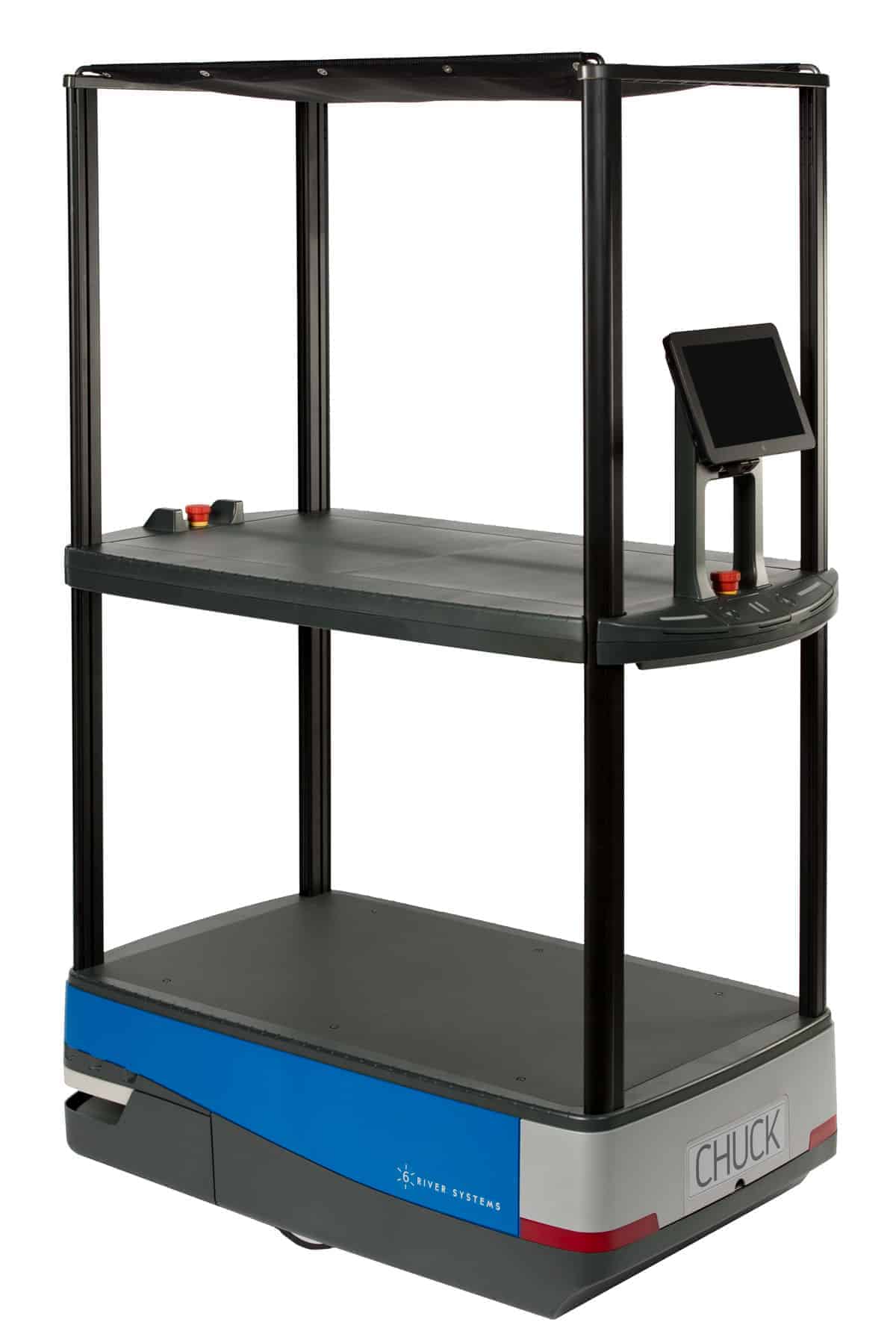
Where to buy 6 River Systems Chuck 2.0 in USA: the trusted retailers we track in this market, with the best price we have observed at each. Prices are checked regularly and can change, and the retailer confirms the final price at checkout.
We may earn a commission on purchases. It never affects our rankings.
$30,000 – $40,000
GreyOrange Ranger GTP
GreyOrange Ranger GTP is positioned as a high-throughput goods-to-person order picking solution that pairs a fleet of agile mobile robots with a centralized orchestration layer, delivering fast ROI for mid-to-large distribution centers. Compared with the station-focused dexterity of Berkshire Grey and the compact mobile manipulators from IAM Robotics, Ranger GTP emphasizes fleet scalability and energy-efficient continuous flow, lowering per-order fulfillment cost through density-optimized routing and software-driven utilization.

Where to buy GreyOrange Ranger GTP in USA: the trusted retailers we track in this market, with the best price we have observed at each. Prices are checked regularly and can change, and the retailer confirms the final price at checkout.
We may earn a commission on purchases. It never affects our rankings.
$40,000 – $120,000
Berkshire Grey Robotic Pick Station
The Berkshire Grey Robotic Pick Station leads in vision-driven, multi-arm dexterous picking for mixed-SKU order fulfillment, excelling at complex piece-picking and parcel induction where human-like handling is required. While its higher per-station capital and integration footprint can exceed the upfront cost of mobile-first systems like GreyOrange and IAM Robotics, its technical advantage in reliable grasping and software-trained perception reduces downstream errors and labor overhead in high-mix operations.
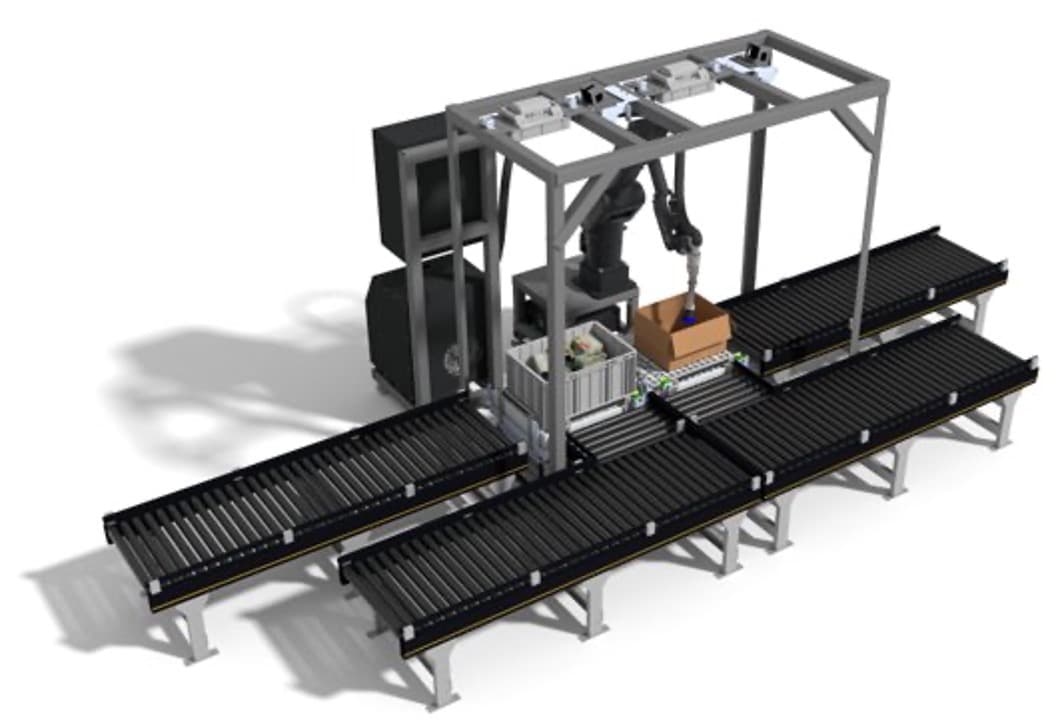
Where to buy Berkshire Grey Robotic Pick Station in USA: the trusted retailers we track in this market, with the best price we have observed at each. Prices are checked regularly and can change, and the retailer confirms the final price at checkout.
We may earn a commission on purchases. It never affects our rankings.
$200,000 – $650,000
IAM Robotics Swift
IAM Robotics Swift offers a compact, quick-to-deploy mobile picking robot designed for aisle-level piece and tote picking, making it a cost-efficient choice for retailers and 3PLs seeking rapid throughput gains without major infrastructure changes. Compared to the dense rack automation of Hai Robotics and the multi-arm stations from Berkshire Grey, Swift’s lower capital intensity and modular deployment model delivers a faster payback for facilities prioritizing flexibility and minimized installation downtime.

Where to buy IAM Robotics Swift in USA: the trusted retailers we track in this market, with the best price we have observed at each. Prices are checked regularly and can change, and the retailer confirms the final price at checkout.
We may earn a commission on purchases. It never affects our rankings.
$45,000 – $150,000
Hai Robotics HaiPick A42
Hai Robotics HaiPick A42 is a rack-based autonomous storage and retrieval robot optimized for very high storage density and steady-state throughput in large-scale order fulfillment environments. Unlike fleet-based mobile pickers such as GreyOrange or small-footprint systems like IAM Robotics, HaiPick A42 delivers attractive long-term cost-per-SKU and space savings for warehouses able to invest in racking infrastructure, making it financially advantageous where floor space and inventory density drive total cost of ownership.
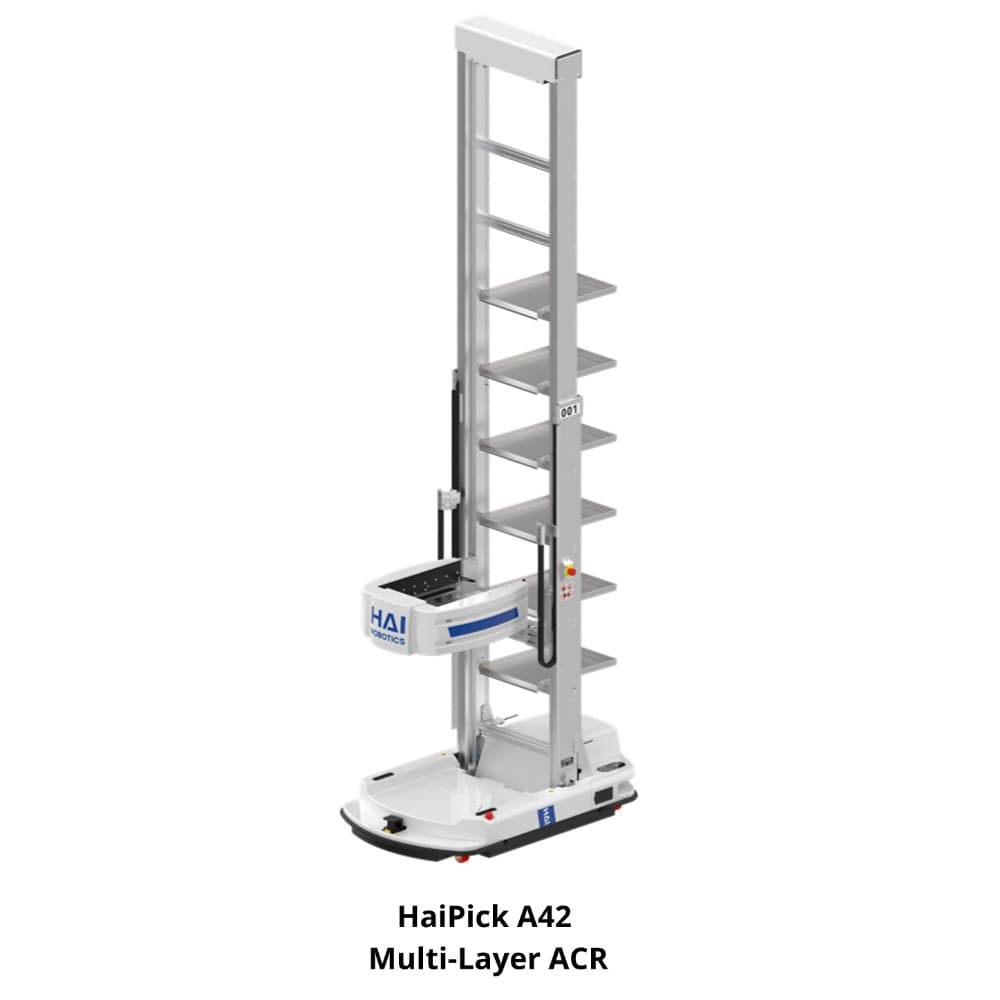
Where to buy Hai Robotics HaiPick A42 in USA: the trusted retailers we track in this market, with the best price we have observed at each. Prices are checked regularly and can change, and the retailer confirms the final price at checkout.
We may earn a commission on purchases. It never affects our rankings.
$35,000 – $120,000
Why Order Picking Robots Work: Research and Industry Evidence
A growing body of industry reports, pilot studies, and peer-reviewed research shows that automating order picking delivers measurable operational improvements. Evidence comes from a mix of vendor case studies, independent analyses, and academic work demonstrating gains in picking productivity, inventory accuracy, worker safety, and total cost of fulfillment. Results vary by warehouse layout, SKU profile, and integration quality, but consistent trends point to faster fulfillment cycles and improved labor utilization when systems are deployed thoughtfully.
Productivity gains: Industry analyses and pilot projects commonly report double-digit improvements in picks per hour versus manual picking, with many implementations showing 20% to 60% increases depending on density and workflow.
Accuracy and quality: Automated picking workflows typically reduce picking errors; error rates in automated or guided picking environments are commonly reported below traditional manual methods, improving customer satisfaction and lowering return/expedite costs.
Return on investment: Multiple operator case studies show payback periods frequently in the 12 to 36 month range, influenced by labor rates, throughput volume, and system utilization.
Workplace safety and ergonomics: Automation reduces repetitive motion tasks and heavy walking for staff, lowering the incidence of musculoskeletal injuries and related downtime.
System integration benefits: Linking robots to warehouse management systems and real-time analytics enables dynamic tasking, better slotting decisions, and continuous process improvement.
Scalability and flexibility: Modular AMR-based and robotic station solutions allow staged rollouts, making it possible to scale with seasonal demand or expand into new SKUs without full facility redesign.
Frequently Asked Questions
Which robot should I choose for humans and automation together?
Locus Robotics LocusOne is a strong pick because it’s designed to work collaboratively alongside human workers, with an advanced navigation system and high payload capacity (4.8 average rating).
What exact feature helps 6 River Systems Chuck 2.0 pick faster?
6 River Systems Chuck 2.0 uses machine learning to optimize picking processes, aiming for faster and error-free order completion, and it’s highly autonomous with minimal human intervention (4.9 average rating).
How does Geek+ P800 compare if I want speed and flexibility?
Geek+ P800 is rated 4.7 and is built for speed with efficient sorting capabilities, a customizable modular design for different workflows, and an easy-to-use interface—so you can adapt without reworking everything.
Does LocusOne support integration into different warehouse sizes?
Yes—Locus Robotics LocusOne is scalable for various warehouse sizes and supports seamless integration, with an advanced navigation system and high payload capacity (4.8 average rating).
Conclusion
This page highlights seven top order picking robots available in the USA for 2026: Locus Robotics LocusOne, Geek+ P800, 6 River Systems Chuck 2.0, GreyOrange Ranger GTP, Berkshire Grey Robotic Pick Station, IAM Robotics Swift, and Hai Robotics HaiPick A42. Each product suits different warehouse profiles: LocusOne for proven multi-site deployments and flexibility, Geek+ P800 for high-density picking and fleet performance, Chuck 2.0 for human-robot collaboration at the counter, Ranger GTP for large distribution center throughput, Berkshire Grey for integrated pick-station automation, IAM Robotics Swift for aisle-level autonomy, and HaiPick A42 for automated storage and retrieval with dense robotics. For most mid-to-large e-commerce and omnichannel fulfillment centers, Locus Robotics LocusOne stands out as the best overall choice because of its strong track record in U.S. facilities, rapid deployability, and mature fleet orchestration software. I hope you found what you were looking for; you can refine or expand your search by SKU profile, throughput needs, integration requirements, or budget to find the best match for your operation.