

2026 Guide: Top 7 Container Unloading Robots in the USA
Container unloading robots are designed to automatically remove cargo from shipping containers, greatly facilitating faster turnaround times in ports and warehouses. In America's rapidly evolving logistics landscape, these robots are increasingly appealing because they improve productivity, reduce operational costs, and address labor shortages. They speed up container-to-yard flows, reduce manual handling injuries, and enable more predictable throughput during peak shipping seasons. Buyers in the USA value solutions that deliver high throughput, reliable detection and grasping of mixed packages, easy integration with warehouse management systems and conveyors, and flexible deployment across docks and container yards. As e-commerce, reshoring, and port automation accelerate demand, container unloader technologies have become an essential investment for operators seeking measurable ROI, safer workplaces, and better supply chain resilience.
Inception's AI took the time to understand this market in the USA · · How we pickWe may earn a commission on purchases. It never affects our rankings.
Top Picks Summary
Boston Dynamics Stretch
Boston Dynamics Stretch is positioned as the most flexible, ready-to-deploy container-unloading robot thanks to its mobile base, long-reach arm and advanced perception for mixed-pallet and loose-piece handling. Compared with heavy fixed industrial arms like the FANUC and ABB models, Stretch minimizes facility modification and integration time, delivering faster ROI for warehouses that need high adaptability rather than maximum payload capacity. Its technical strength is mobility and robust vision-driven manipulation, which reduces labor costs and lowers upfront infrastructure investments versus traditional fixed installations.

Estimated$150,000 – $250,000
Pickle Robot Unloader
Pickle Robot Unloader focuses on SKU-level accuracy and rapid deployment for container and truck unloading in e-commerce and retail distribution, using a vision-first approach and soft-grasp tooling to handle varied consumer goods. Financially it targets lower capital intensity and faster payback for mid-size operators by reducing manual picking headcount and avoiding heavy conveyors or gantries that larger systems require. Technically it complements mobile systems like Boston Dynamics Stretch with tighter item-level pick performance while being more cost-effective than heavy industrial manipulators for diverse SKU mixes.

FANUC M-2000iA/2300
The FANUC M-2000iA/2300 is the market leader for extreme heavy-duty container handling, delivering very high payload and reach for pallet and bulk-container unloading where throughput and durability are paramount. Compared with more flexible mobile robots, FANUC’s offering requires greater facility investment and integration but rewards operators in high-cycle heavy-load environments with a lower total cost of ownership over long service lives and predictable maintenance schedules. Its technical advantage is proven industrial uptime, strong global service network, and compatibility with heavy automation cells used in ports and large warehouses.

We may earn a commission on purchases. It never affects our rankings.
Estimated$350,000 – $600,000
ABB IRB 760
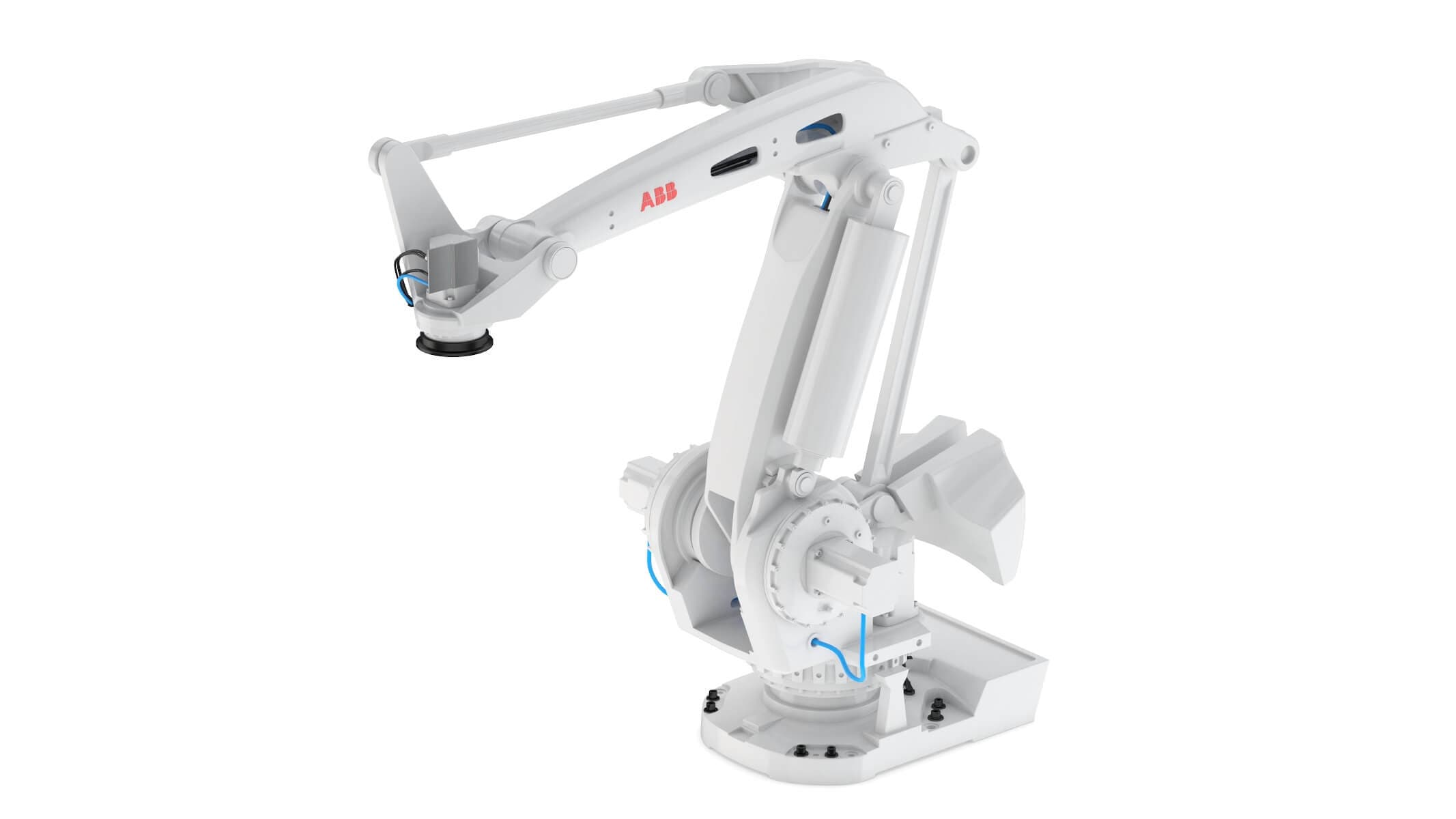
ABB IRB 760 is a robust industrial contender for container unloading applications where precision, speed and integration with plant-wide control systems matter most. Versus competitors like FANUC, the IRB 760 stands out with ABB’s software ecosystem and safety/integration options that can reduce engineering customization costs in complex automated facilities. Financially it appeals to operators who need predictable lifecycle costs and deep automation-platform support rather than the immediate flexibility of mobile robots.
Mujin TruckBot
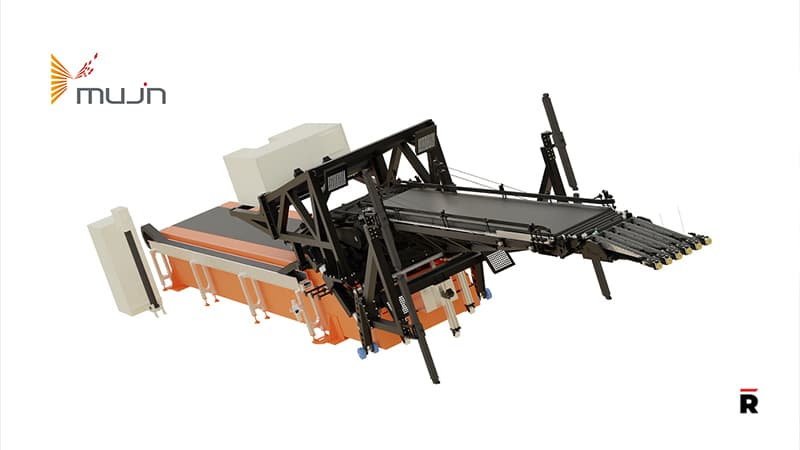
Mujin TruckBot specializes in autonomous truck- and trailer-unloading with AI-driven motion planning and 3D vision that enable operation in unstructured or changing container layouts without extensive fixtures. It competes directly with mobile systems like Stretch on adaptability, but differentiates through advanced motion planners and fleet-cloud orchestration that speed deployment across multiple docks and reduce per-dock engineering spend. The result is a lower operational cost for dynamic yards and fast scalability for operators replacing manual dock labor.
We may earn a commission on purchases. It never affects our rankings.
Estimated$120,000 – $300,000
Hikrobot Efficient Unloader
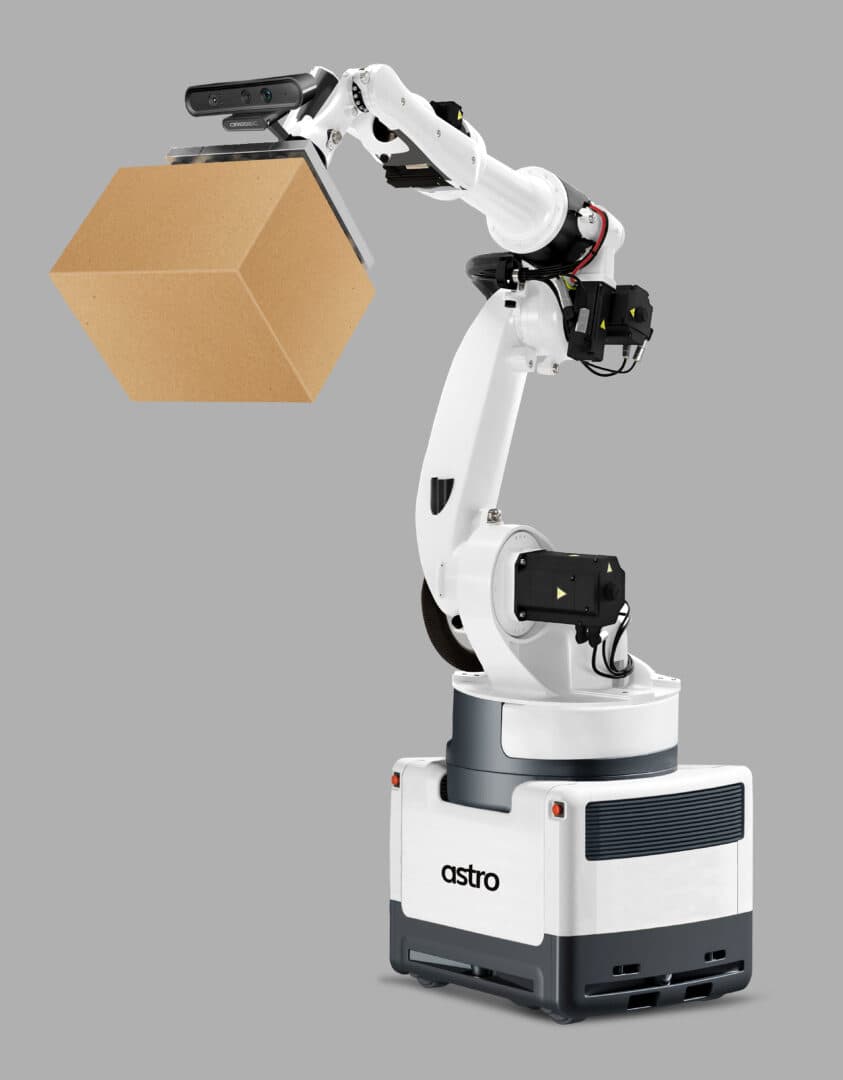
The Hikrobot Efficient Unloader is designed to optimize loading and unloading processes with its high speed and precision capabilities. It stands out in the market due to its advanced intelligent algorithms that enhance operational efficiency, reducing downtime. Built with robust components, this unloader can handle various materials with ease. It's a perfect choice for industries looking for a reliable and efficient automation solution.
Estimated$100,000 – $150,000
Corvus Robotics Container Unloader
Corvus Robotics Container Unloader targets mid-market warehouses with a compact, modular unloader that combines automated conveyors, a collaborative arm and configurable end-effectors to handle retail and packaged-goods containers. Financially it aims to fill the gap between high-capex industrial cells (FANUC/ABB) and highly flexible mobile bots (Stretch/Mujin) by offering a predictable capital layout and shorter installation timelines. Technically it is optimized for throughput in standardized container formats, giving operators a lower-complexity automation path when full mobility or extreme payloads are not required.

Why Science and Industry Back Container Unloading Automation
Academic research and industry reports consistently show that automation in container handling reduces manual strain, shortens cycle times, and increases consistency of operations. Studies from occupational safety and logistics research highlight fewer workplace injuries when heavy or repetitive unloading tasks are automated. Industry analyses and case studies from major ports and large warehouse operators demonstrate meaningful gains in throughput and predictable labor spend. For operators considering deployment, research emphasizes not only hardware capability but also software integration, vision and grasping accuracy, and human-robot collaboration as critical success factors.
Productivity: Multiple case studies report throughput gains of 25% to 70% after deploying automated unloading systems, depending on container mix and pre-existing workflows.
Safety: Research from occupational safety bodies shows notable reductions in musculoskeletal injuries when heavy lifting and repetitive handling are automated.
Cost and ROI: Industry analyses commonly show payback periods ranging from 12 to 36 months for higher-volume operations, factoring in reduced labor overtime and faster turn times.
Accuracy and Waste Reduction: Improved detection and robotic handling lower mis-sorts and damaged goods, reducing claims and rework costs.
System Integration: Studies stress that success depends on seamless integration with warehouse management systems (WMS), yard management, and conveyor/AGV networks rather than hardware alone.
Energy and Sustainability: Automated systems can be tuned for energy efficiency and can reduce idle time for expensive equipment, contributing to lower operating emissions per unit handled.
Frequently Asked Questions
Which robot should I pick for mixed container unloading?
Boston Dynamics Stretch earns the recommendation for mixed-pallet and loose-piece container unloading because it combines a mobile base, long-reach arm, and advanced perception for mixed-SKU recognition and autonomous pick sequencing, with an average rating of 4.7.
What feature does Pickle Robot Unloader use for mixed SKUs?
Pickle Robot Unloader uses a vision-first system tuned for mixed-case container and trailer unloading without extensive preprogramming, and its modular gripper technologies support suction, mechanical fingers, and rapid tooling swaps (average rating 4.5).
How does Boston Dynamics Stretch pricing compare to other options?
Pricing isn’t provided for Boston Dynamics Stretch, Pickle Robot Unloader, or FANUC M-2000iA/2300 in the available product data, so I can’t compare exact prices or value versus alternatives (ratings: 4.4, 4.5, 4.4).
Is FANUC M-2000iA/2300 suited for heavy-duty container handling?
Yes—FANUC M-2000iA/2300 is engineered for extremely heavy payloads (metric-ton class) with large-format handling and robust arm/base design for heavy-duty palletizing and container unloading; it has an average rating of 4.4.
Conclusion
Container unloading robots are reshaping how American ports and warehouses move goods. The leading options for 2026 include Boston Dynamics Stretch, Pickle Robot Unloader, FANUC M-2000iA/2300, ABB IRB 760, Mujin TruckBot, Hikrobot Efficient Unloader, and Corvus Robotics Container Unloader. Each has strengths: Boston Dynamics Stretch stands out for versatile box handling and rapid deployment, Pickle Robot Unloader is strong for mixed-pallet environments, FANUC and ABB bring industrial-grade payload and safety certifications, Mujin offers flexible vision-driven automation, Hikrobot targets efficient high-density operations, and Corvus focuses on container-specific workflows. If you want a single recommendation to start with, Boston Dynamics Stretch is often the best choice for general-purpose container unloading due to its balance of speed, adaptability, and ecosystem support. I hope you found the options you were looking for. You can refine or expand your search using the site search to focus on payload, throughput, integration features, or price range.