

Best External Sound Cards 2026: Top 7 USB Audio Interfaces in the USA
Published on Wednesday, February 25, 2026
External sound cards offer a portable, versatile solution for enhancing audio quality across laptops, desktops, and mobile devices. Connecting primarily via USB or USB-C, these devices provide superior digital-to-analog conversion (DAC), analog-to-digital conversion (ADC), and dedicated preamps that outperform typical onboard audio. In the USA, demand for external sound cards has grown thanks to the rise in home recording, streaming, podcasting, and competitive gaming. American consumers value devices that deliver clear sound, low latency for live performance and gaming, multiple inputs and outputs for microphones and instruments, and compact designs for mobile workflows. Key appeals include improved sound clarity, richer dynamics, surround and virtual surround support for gaming, hardware monitoring, and integrated effects or software ecosystems that streamline creative work. As workflows have shifted toward remote content creation and hybrid studio setups, external sound cards have become essential tools for musicians, producers, streamers, and audiophiles who want reliable, measurable audio improvements without the complexity of internal installations.
Top Picks Summary
Sound BlasterX G6
The Sound BlasterX G6 is positioned as the best-in-class portable gaming external sound card thanks to its headphone amp, discrete DAC, and robust DSP features that deliver virtual surround and low-latency monitoring. It stands out against studio-focused interfaces on this list by offering a gamer-friendly feature set and price point that undercuts high-end converters like the RME ADI-2 while offering more specialized gaming features than the GameDAC Gen 2.

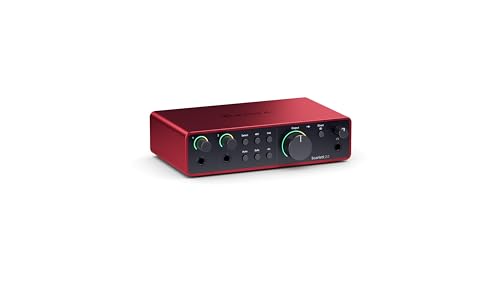
Focusrite Scarlett 2i2 4th Gen
The Scarlett 2i2 4th Gen earns its place as the go-to budget studio external sound card for singer-songwriters and home studios because of its reliable preamps, ease of use, and strong software bundle that make recording simple and affordable. Compared with technically cleaner options like the MOTU M2 or the RME ADI-2 DAC FS, the Scarlett prioritizes a lower price and workflow-friendly features over top-tier converters and advanced metering.
MOTU M2
The MOTU M2 is a technically excellent external sound card that punches above its price with class-leading AD/DA performance, ultra-low latency, and detailed full-color metering, making it a favorite for users who want transparent recording without paying RME-level prices. It balances professional measurement and monitoring features better than the Scarlett 2i2 while remaining far more affordable than market-leader converters like the ADI-2 DAC FS.

RME ADI-2 DAC FS
The ADI-2 DAC FS is the market leader for external sound cards where absolute fidelity, flexible DSP, and exhaustive metering are required — its converter performance and feature depth exceed virtually every competitor on this list. That technical dominance comes at a higher price, but buyers get pro-grade stability and features unmatched by consumer-focused models such as the Creative G6 or SteelSeries GameDAC Gen 2.

SteelSeries GameDAC Gen 2
The GameDAC Gen 2 is a dedicated console-focused external sound card that simplifies high-quality gaming audio with a built-in ESS DAC and console-friendly UI, making it the best choice for players who want plug-and-play fidelity on PS4/PS5. It trades the studio-grade inputs and routing of products like the Scarlett or MOTU for a console-first experience and a retail positioning that justifies its premium for gamers compared with the more versatile Creative G6.

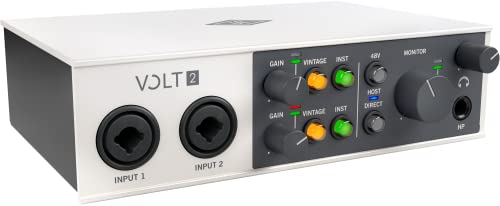
Universal Audio Volt 2
The Volt 2 is aimed at creators who want a compact external sound card with musical preamp coloration and strong build quality, offering analog-style warmth and included software that appeals to producers on a moderate budget. It sits between entry-level interfaces and high-end converters by offering tastefully colored sound and hardware feel that some users prefer over the clinically transparent MOTU and RME options.
Schiit Hel 2
The Schiit Hel 2 positions itself as a high-value audiophile external sound card/headphone amp, delivering robust power, clean topology, and an audiophile tuning at a price that undercuts many premium DAC/amps. Unlike studio-centric interfaces on this list, Hel 2 focuses purely on critical listening and headphone driving capability, offering superior price-to-performance for audio enthusiasts compared with pro-oriented RME or UA units.

Where to buy Schiit Hel 2 in USA: the trusted retailers we track in this market, with the best price we have observed at each. Prices are checked regularly and can change, and the retailer confirms the final price at checkout.
We may earn a commission on purchases. It never affects our rankings.
$199 – $249
Why external sound cards improve audio: research and practical findings
Scientific and engineering analyses, along with industry measurements, explain why external sound cards deliver better audio than most onboard solutions. External units isolate sensitive audio circuits from computer electrical noise, include higher-performance DACs and ADCs, and use dedicated clocking and buffering to reduce jitter. Independent measurements and technical reports from audio engineering communities and review labs consistently show external interfaces achieving lower noise floors, higher dynamic range, and reduced total harmonic distortion compared with integrated motherboard audio. For musicians and streamers, lower round-trip latency through optimized drivers (ASIO/Core Audio) improves tracking and live monitoring. For gamers and listeners, high-quality DACs and headphone amplification create clearer imaging and more accurate frequency response. The practical takeaway is that an external sound card gives measurable advantages in clarity, headroom, and reliability for recording, playback, and live monitoring.
Dedicated DAC/ADC: External units use higher-spec converters, improving dynamic range and reducing distortion compared with typical onboard audio.
Lower noise and isolation: Physical separation from a computer's power supply reduces electrical interference and hum.
Reduced latency: Proper drivers and on-board DSP lower round-trip latency, essential for recording and competitive gaming.
Better preamps and inputs: Quality microphone preamps and instrument inputs produce cleaner recordings and stronger signal levels.
Consistent measurements: Audio engineering tests commonly report better signal-to-noise ratio and lower total harmonic distortion for external interfaces.
Practical benefits: Improved monitoring accuracy, reliable multitrack recording, and enhanced headphone output for critical listening and gaming.
Frequently Asked Questions
Which external sound card should I buy for gaming?
Choose the Creative Sound BlasterX G6 for gaming: it has virtual 7.1 surround plus an Xamp dedicated discrete headphone amp, and it supports USB 32-bit/384 kHz audio. It’s rated 4.3 stars, costs $161.49 USDand includes a 1-year warranty.
Does Focusrite Scarlett 2i2 4th Gen support USB-C recording?
Yes—the Focusrite Scarlett 2i2 4th Gen is a 2-in/2-out USB-C audio interface with two Scarlett mic preamps and instrument inputs. It uses 24-bit/192 kHz converters with low-latency monitoring, has a 4.7 rating, and costs $224.99 USDwith a 1-year warranty.
Is MOTU M2 a better value than Scarlett 2i2 4th?
The MOTU M2 costs $199.95 USDversus the Focusrite Scarlett 2i2 4th Gen at $224.99 USDand both are USB-C interfaces for recording/monitoring. MOTU M2 is rated 4.6 and includes full-color LCD metering plus balanced outputs, with a 1-year warranty.
What output monitoring features does MOTU M2 offer?
MOTU M2 includes a full-color LCD metering screen for accurate level monitoring and easy gain setup, plus balanced outputs and a headphone amp for tracking and reference monitoring. It’s rated 4.6 stars, costs $199.95 USDand comes with a 1-year warranty.
Conclusion
External sound cards remain a fast-growing and practical upgrade for American creators, gamers, and audiophiles. This page highlights seven strong options for 2026: Creative Sound BlasterX G6, Focusrite Scarlett 2i2 4th Gen, MOTU M2, RME ADI-2 DAC FS, SteelSeries GameDAC Gen 2, Universal Audio Volt 2, and Schiit Hel 2. Each product suits different priorities: the RME ADI-2 DAC FS and Schiit Hel 2 excel for audiophiles, SteelSeries GameDAC Gen 2 targets gamers, and Universal Audio Volt 2 and Creative Sound BlasterX G6 add creative tools and effects. For most users seeking the best balance of price, features, driver support, and studio-ready performance in the USA, the Focusrite Scarlett 2i2 4th Gen is the top overall choice on this list. I hope you found what you were looking for; you can refine or expand your search using the search box to filter by use case, inputs, or price range.